Scottish Geologist
That Girl That Makes Videos About Rocks
Welcome to Scottish Geologist’s website - the home of “That Girl That Makes Videos about rocks”.
I’m Luisa - a Glasgow-trained geologist who ditched the engineering world after nine years to follow my dream of, well… talking about rocks for a living. And it worked! Now I Make funny, Bite-sized geology videos on TikTok, Instagram, YouTube and Facebook (@scottishgeologist) where more than 600K rock fans follow along.
I started making videos about rocks in March 2023 because I felt like something was seriously missing from social media: a proper appreciation for Scotland’s incredible geological landscapes. So I set out to fix that - one silly, educational video at a time.
As my online community grew, I wanted to take what I do on camera and bring it outdoors. That’s why I created Scot Rock Walks - Scottish Geology Tours ranging from short local walks to full-day and multi-day adventures across Scotland.
Come and explore the birthplace of modern geology with me!
2027 Geology Expeditions
A Journey through Jurassic seas, ancient volcanoes and Scotland’s most spectacular mountains
Explore the geology of Skye through the eyes of a geologist, discovering ancient volcanoes, the roots, and some of the oldest rocks, and the dinosaurs that were cutting about in Scotland back in the day.
Join me on an unforgettable five-day geological expedition to the Isle of Skye, where towering mountains, dramatic coastlines and world-famous landscapes reveal one of the most extraordinary geological stories on Earth.
From dinosaur footprints and Jurassic coastlines to ancient magma chambers and spectacular volcanic landscapes, Skye offers an unparalleled opportunity to journey through more than three billion years of Earth's history.
Together, we'll explore the island's iconic landscapes while uncovering the incredible processes that shaped them. Walk across ancient tropical seabeds, discover where dinosaurs once roamed, stand beside the crystal-clear waters of the Fairy Pools, sail into the heart of the Black Cuillin at Loch Coruisk, and explore the volcanic rocks that formed as the North Atlantic Ocean began to open around 60 million years ago.
This expedition is designed for anyone with a curiosity about our planet. Whether you're completely new to geology or already have a passion for rocks and landscapes, every stop is brought to life through engaging storytelling, hands-on learning and plenty of opportunities to ask questions.
With spectacular scenery, fascinating geology and a relaxed, friendly atmosphere, this is far more than a sightseeing holiday—it's an immersive journey through the geological history of one of Scotland's most iconic islands.
Tour Highlights
Spend five unforgettable days exploring the spectacular geology of the Isle of Skye.
Discover over three billion years of Earth's history, from Jurassic tropical seas to ancient volcanoes.
Search for dinosaur footprints and explore fossil-bearing Jurassic rocks.
Walk beside the famous Fairy Pools and learn how the Black Cuillin Gabbro formed deep beneath an ancient volcano.
Enjoy a scenic boat trip across to Loch Coruisk, surrounded by the dramatic peaks of the Black Cuillin.
Explore the volcanic plumbing system of the Skye Central Igneous Complex, including gabbros, granites and cone sheets.
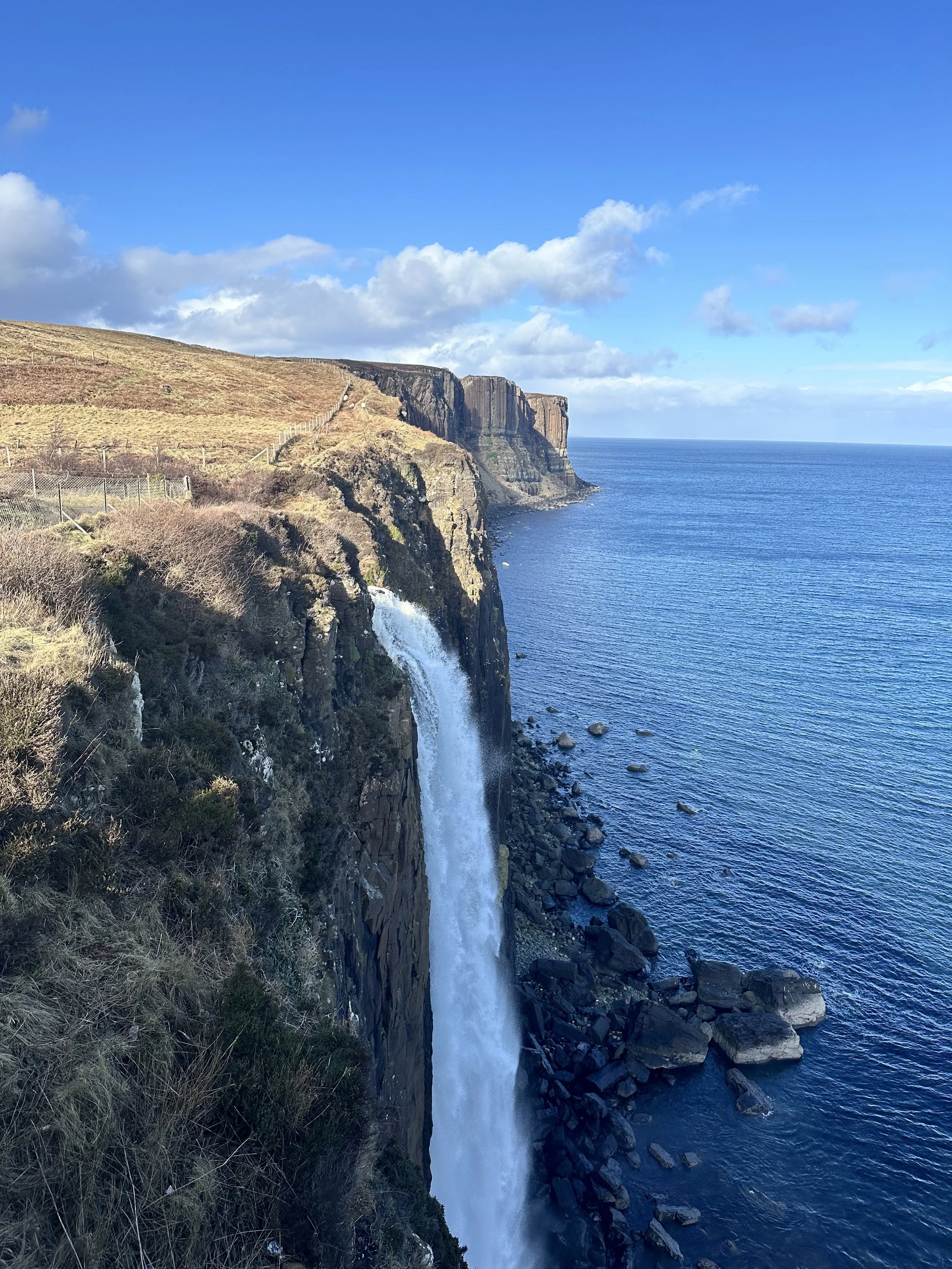
Visit iconic landscapes including the Quiraing, Kilt Rock, Staffin, Elgol, Fairy Pools and Neist Point.
Discover how glaciers sculpted Skye's dramatic mountains and sea lochs during the Ice Age.
Learn about plate tectonics, magma chambers, lava flows, mountain building and the opening of the North Atlantic.
Small-group experience with plenty of time for discussion, photography and hands-on geological interpretation.
Guided throughout by Scottish Geologist, making complex geology accessible, engaging and enjoyable.
This is far more than a sightseeing holiday. It's an immersive geological adventure that will completely change the way you see Scotland—and the Earth beneath your feet.
Itinerary
Day 1 – Journey to Skye
Ancient Tropical Seas
Meet: Glasgow City Centre (or another agreed pick-up location) at 9:00 am.
We'll travel north through some of Scotland's most spectacular landscapes, with plenty of opportunities to discuss the geology we pass along the way. As we journey through the Highlands, you'll gain an introduction to Scotland's geological history before arriving on the Isle of Skye.
After arriving on Skye, we'll begin our expedition by exploring the Jurassic rocks of southern Skye. Here we'll discover fossil-bearing limestones, sandstones and mudstones that were deposited beneath warm tropical seas around 170 million years ago—long before the island became volcanic.
We'll then continue to our accommodation before enjoying a welcome evening and an introduction to the incredible geological story we'll uncover throughout the week.
Highlights
Departure from Glasgow at 9:00 am
Scenic drive through the Scottish Highlands
Geological commentary throughout the journey
Durness Limestones
Elgol
Jurassic limestones and sedimentary rocks
Introduction to Skye's geological history
Welcome dinner
Day 2 – Dinosaurs & Ancient Lagoons
Life Before the Volcano
We'll travel to the northeast of Skye to discover why the island is internationally renowned for its Jurassic fossils.
Today we'll explore ancient lagoons, river systems and coastal environments while searching for dinosaur footprints and learning about the remarkable fossils preserved within the island's sedimentary rocks.
Highlights
Brothers' Point
Staffin
An Corran
Kilt Rock
Dinosaur footprints
Fossils
Jurassic sedimentary rocks
Ancient lagoons and deltas
Day 3 – Into the Heart of the Volcano
Fairy Pools & Loch Coruisk
Today is the centrepiece of the expedition.
We'll begin at the Fairy Pools, where crystal-clear waters flow over the famous Cuillin Gabbro. Here we'll explore how magma slowly cooled deep beneath the Earth's surface to create the rocks that now form the Black Cuillin.
Later we'll travel to Elgol and board a boat across Loch Scavaig to the spectacular Loch Coruisk. Surrounded by towering gabbro peaks, we'll discover the volcanic plumbing system exposed by millions of years of erosion while taking in one of Scotland's most breathtaking landscapes.
Highlights
Fairy Pools
Cuillin Gabbro
Fractional crystallisation
Magma chambers
Boat trip to Loch Coruisk
Black Cuillin
Central Igneous Complex
Cone sheets
Glacial landscapes
Day 4 – The Birth of a Volcano
Lava Fields & Landslips
Today we'll explore the volcanic landscapes that make Skye famous.
We'll investigate the lava flows that once covered much of the island before visiting the spectacular Quiraing, where landslips and glacial erosion have created one of Britain's most iconic landscapes.
Highlights
Quiraing
Mealt Falls
Trotternish Ridge
Basalt lava flows
Dolerite sills
Columnar jointing
Landslips
Glacial erosion
Day 5 – Ancient Continents & Journey Home
The Oldest Rocks of Skye
Our final morning explores some of Skye's oldest rocks along its spectacular western coastline.
We'll discover ancient Lewisian Gneiss and Torridonian sandstones before bringing together the complete geological story of the island—from ancient continental crust through Jurassic seas and finally to the volcanic landscapes we've explored throughout the week.
Around 12:00 pm, we'll begin our journey back to Glasgow, with geological commentary along the route and comfort stops as required.
We expect to arrive back in Glasgow during the evening.
Highlights
Lewisian Gneiss
Torridonian Sandstone
Neist Point
Coastal geology
Geological summary of Skye
Depart Skye at approximately 12:00 pm
Scenic return journey to Glasgow
Why is this tour different?
This isn't simply a sightseeing tour of Scotland's west coast.
It's a journey inside an ancient volcano.
Over five days you'll discover how volcanoes erupt, how magma moves through the crust and how millions of years of erosion have exposed the hidden plumbing system beneath one of Britain's greatest volcanic provinces.
By the end of the expedition you'll understand not only how Skye formed—but how volcanoes work anywhere on Earth.
What to expect
Expect relaxed days filled with spectacular scenery, fascinating geology and plenty of opportunities to stop for photographs.
We'll combine short walks, boat trips, coastal sections and mountain viewpoints while gradually building the geological story throughout the week.
Every day introduces another chapter in the evolution of Scotland's ancient volcanoes.
Suitable for complete beginners as well as experienced geology enthusiasts.
Small group experience
Geology-focused guiding
Suitable for enthusiastic beginners and geology lovers alike
Scenic stops throughout
Relaxed, friendly and informative atmosphere
🚶 Average walking: 3–5 miles (5–8 km) per day
🥾 Terrain: Beaches, coastal paths, grassy tracks, rocky shorelines and occasional uneven ground.
⛰️ Difficulty: Moderate. Suitable for anyone with a reasonable level of fitness who is comfortable walking on uneven terrain.
📸 Pace: Relaxed, with frequent stops for photography, geology and wildlife.
What’s Included?
Ticket option: £2450.00 for 5 days (Guiding, transportation, accommodation, breakfast and dinner)
4 nights accommodation
5 days of guided geological touring
Transport throughout the tour from/to Glasgow
Expert geology interpretation by Scottish Geologist
Geological field guide and information pack
All island ferry crossings/boat trips
Breakfast and evening meals included (food only)
Small group experience
Ticket option: £750 for 5 days (Guiding and transportation only) - please book accommodation in Portree for the 4 nights.
5 days of guided geological touring
Transport throughout the tour from/to Glasgow
Expert geology interpretation by Scottish Geologist
All island ferry crossings/boat trips
Geological field guide and information pack
Small group experience
What’s Not Included
Ticket option: £2450.00 for 5 days (Guiding, transportation, accommodation, breakfast and dinner)
Drinks not included with meals
Personal travel insurance
Lunches not included
Optional activities outside the itinerary
Ticket option: £750 for 5 days (Guiding and transportation only) - please book accommodation in Portree for the 4 nights.
Meals not included
Accommodation not included (please book accommodation in Portree for 4 nights)
Personal travel insurance
Optional activities outside the itinerary
We will confirm the running of this tour once 3 people book on.
From the oldest rocks to youngest rocks ones in Scotland
Explore the geology of Mull, Iona and Staffa through the eyes of a geologist, discovering ancient volcanoes, the roots of mountains, and some of the oldest rocks in Europe.
Join me on an unforgettable five-day geological expedition exploring one of the most spectacular volcanic landscapes in Europe.
From towering sea cliffs and lava plateaus to ancient magma chambers, ring dykes and world-famous basalt columns, this expedition uncovers the incredible geological story behind Mull, Iona and Staffa.
Around 60 million years ago, western Scotland was transformed by immense volcanic activity as the North Atlantic Ocean began to open. Giant volcanoes erupted across the landscape, feeding vast lava fields and creating the rugged mountains and islands we see today.
Today, those volcanoes have long since disappeared, but their internal plumbing systems remain beautifully exposed, allowing us to walk through the roots of ancient volcanoes and discover how they once worked.
Whether you're completely new to geology or already have a passion for rocks, this expedition will help you understand these incredible landscapes in a completely new way.
Tour Highlights
Discover ancient volcanoes, mountain belts and spectacular sea cliffs.
Explore almost three billion years of Earth's history.
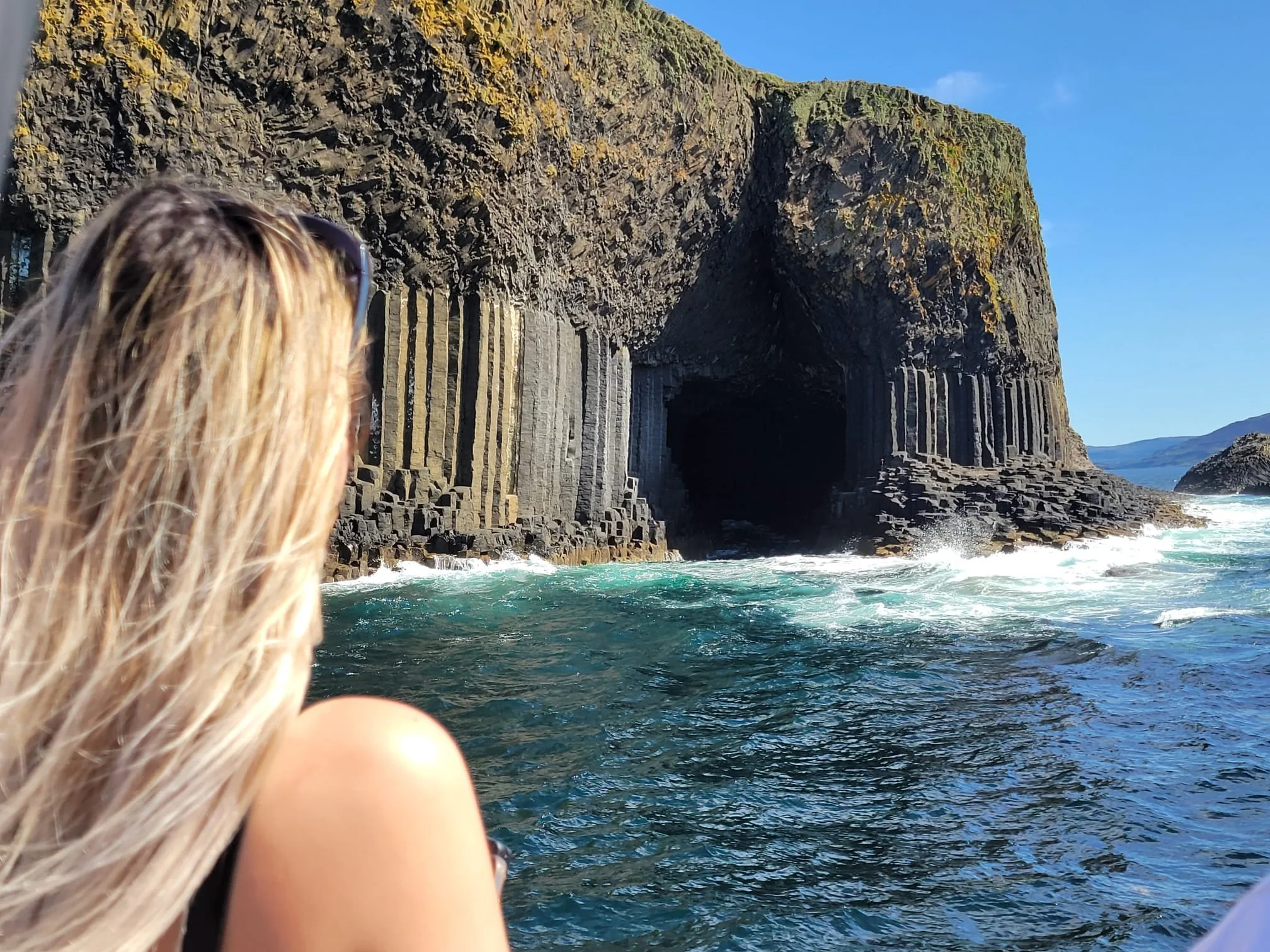
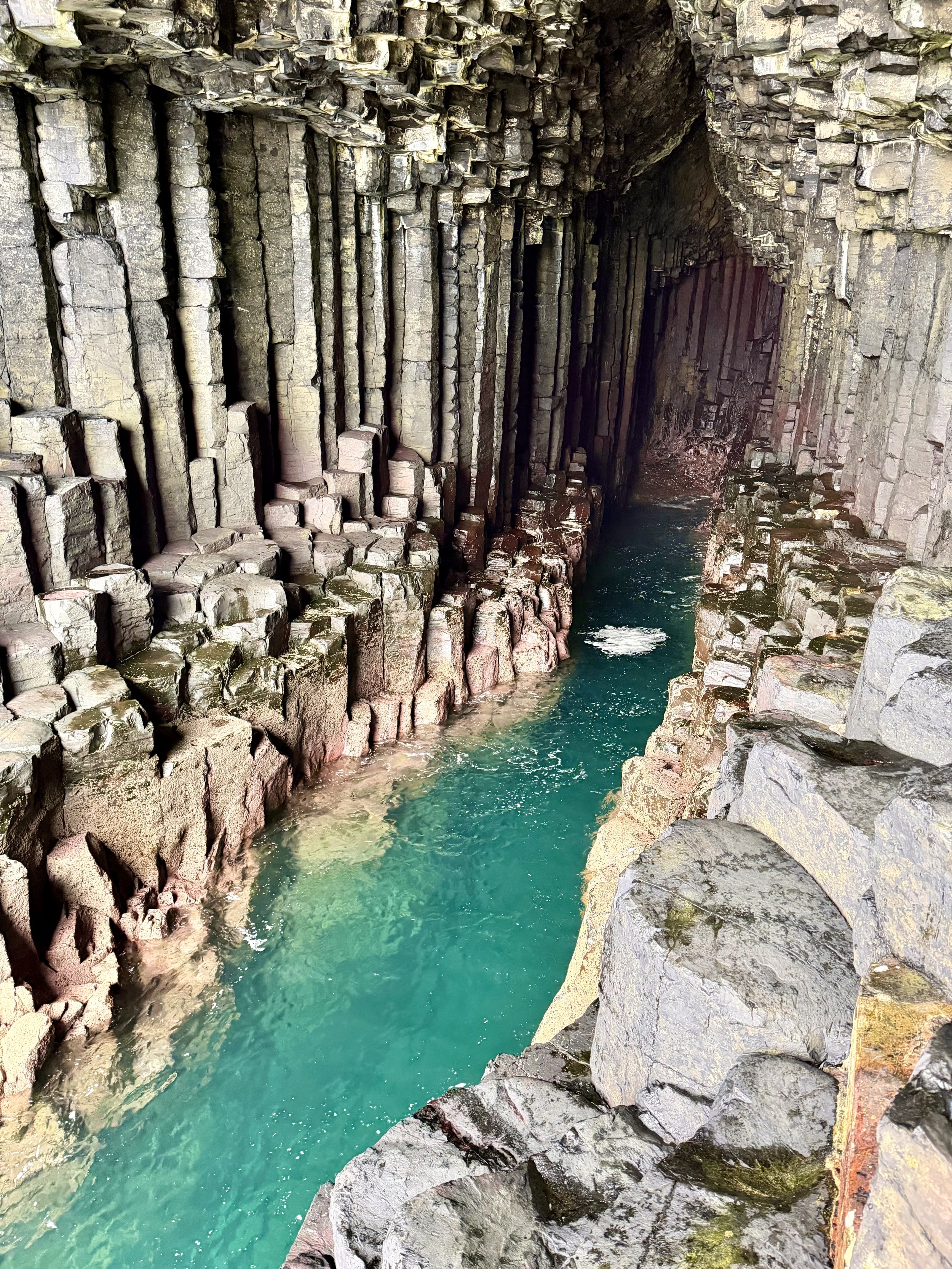
Visit Fingal's Cave and Staffa's spectacular basalt columns.
Discover Iona's famous Lewisian Gneiss.
Learn how giant volcanoes are built from the inside out.
Walk through lava flows, magma chambers and volcanic intrusions.
Small group experience with plenty of opportunities to ask questions and examine the rocks up close.
Four nights' accommodation on Mull.
Guided throughout by Scottish Geologist.
This is far more than a sightseeing holiday. It's an immersive geological adventure that will completely change the way you see Scotland—and the Earth beneath your feet.
Itinerary
Day 1 – Ancient Mountains and Metamorphic Rocks
Ardalanish and the Ross of Mull
Guests meet in Oban in the morning before travelling by ferry to Mull and continuing south to the Ross of Mull. To get to Oban you can get on trains from Glasgow central which take 2 hours 25 mins.
Our geological journey begins with some of the oldest rocks encountered during the expedition. At Ardalanish Bay, we’ll explore Moine metasedimentary rocks that began as ancient sands and muds before being buried, folded and transformed during major episodes of mountain building.
We’ll investigate the effects of regional metamorphism before examining how the later intrusion of the Ross of Mull Granite heated and altered the surrounding rocks. Ardalanish is particularly well known for its metamorphic minerals and provides the perfect place to introduce how temperature, pressure and magma can transform pre-existing rocks.
Highlights
Ferry from Oban to Mull
Ardalanish Bay
Moine metamorphic rocks
Psammite, semipelite and pelite
Folding and deformation
Regional metamorphism
Contact metamorphism
Kyanite, andalusite and sillimanite
Ross of Mull Granite
Welcome evening and introduction to the expedition
This gives you a strong opening because guests begin with the rocks that existed long before Mull’s volcanoes formed.
Day 2 – Ancient Crust Meets a Volcanic Island
Iona and Staffa
Today we continue through geological time by exploring two islands that preserve dramatically different chapters in Scotland’s history.
We’ll first cross to Iona, where ancient gneisses, metamorphic rocks and granitic intrusions reveal the island’s deep geological foundations. We’ll examine how these rocks relate to the ancient continental crust exposed elsewhere along Scotland’s northwest margin.
Later, weather permitting, we’ll travel by boat to Staffa. Here, the geological story jumps forward to around 60 million years ago, when basaltic lava erupted during the opening of the North Atlantic.
At Staffa, we’ll explore the world-famous basalt columns and Fingal’s Cave, learning how thick lava flows cooled, contracted and fractured into their remarkable polygonal shapes.
Highlights
Ferry to Iona
Ancient continental rocks
Lewiston Gneiss and metamorphic rocks
Granitic intrusions
Boat trip to Staffa
Fingal’s Cave
Columnar basalt
Lava cooling and contraction
Coastal erosion
Puffins, depending on season
Iona Abby
Day 3 – A Lost Forest Beneath the Lava
MacCulloch’s Fossil Tree
Today we move fully into Mull’s volcanic story.
We’ll travel by private boat along Mull’s spectacular western coastline towards the remote Ardmeanach Peninsula. From the sea, we’ll be able to examine the enormous succession of basalt lava flows that built the early Mull volcano.
Our aim will be to visit MacCulloch’s Fossil Tree, subject to safe sea and landing conditions. The site preserves the mould of a tree that was engulfed by lava around 60 million years ago, providing extraordinary evidence that forests became established between successive volcanic eruptions.
This day reveals that Mull’s lava plateau was not formed in one catastrophic event. Instead, eruption followed eruption, with periods of calm in between when soils developed and vegetation returned.
Highlights
Private coastal boat expedition
Ardmeanach Peninsula
MacCulloch’s Fossil Tree
Successive basalt lava flows
Fossil soils between eruptions
Evidence of ancient forests
Columnar jointing
Volcanic cliffs
Coastal geomorphology
Please note that landing beside the fossil tree is dependent on weather, sea and tidal conditions.
Day 4 – Inside the Mull Volcano
Magma Chambers, Ring Dykes and Caldera Collapse
After exploring the lava fields, we now travel deeper into the volcanic system.
Today we enter the eroded heart of the Mull Central Complex, where millions of years of erosion have exposed rocks that originally crystallised beneath the volcano.
We’ll investigate how magma moved through the crust, how repeated intrusions built the volcanic centre and how collapse structures controlled the emplacement of later magma.
Locations
Glen More
Loch Ba
Loch Ba Ring Dyke
Ben More viewpoints
Gribun
Accessible parts of the Mull Central Complex
Day 5 – Fire, Ice and the Modern Landscape
Final Mull Exploration and Return to Oban
Our final day brings together the geological story of the entire expedition.
We’ll explore an additional part of Mull’s volcanic landscape, choosing the best locations according to weather, access and the group’s interests. This could include lava flows, dykes, coastal features or viewpoints across the central volcanic complex.
We’ll also examine how glaciers and the modern Atlantic coastline have reshaped the ancient rocks and volcanic structures encountered throughout the week.
We’ll then return to Craignure for the ferry back to Oban.
Highlights
Final volcanic locality
Glacial erosion
Coastal landscape development
Review of Mull’s geological timeline
Ferry back to Oban
End of the expedition
Why is this tour different?
This isn't simply a sightseeing tour of Scotland's west coast.
It's a journey inside an ancient volcano.
Over five days you'll discover how volcanoes erupt, how magma moves through the crust and how millions of years of erosion have exposed the hidden plumbing system beneath one of Britain's greatest volcanic provinces.
By the end of the expedition you'll understand not only how Mull, Staffa and Ardnamurchan formed—but how volcanoes work anywhere on Earth.
What to expect
Expect relaxed days filled with spectacular scenery, fascinating geology and plenty of opportunities to stop for photographs.
We'll combine short walks, boat trips, coastal sections and mountain viewpoints while gradually building the geological story throughout the week.
Every day introduces another chapter in the evolution of Scotland's ancient volcanoes.
Suitable for complete beginners as well as experienced geology enthusiasts.
Small group experience
Geology-focused guiding
Suitable for enthusiastic beginners and geology lovers alike
Scenic stops throughout
Relaxed, friendly and informative atmosphere
🚶 Average walking: 3–5 miles (5–8 km) per day
🥾 Terrain: Beaches, coastal paths, grassy tracks, rocky shorelines and occasional uneven ground.
⛰️ Difficulty: Moderate. Suitable for anyone with a reasonable level of fitness who is comfortable walking on uneven terrain.
📸 Pace: Relaxed, with frequent stops for photography, geology and wildlife.
What’s Included?
4 nights in self catering accommodation with shared bathrooms on Isle of Mull - 2 Twins, 2 doubles and and 2 single rooms available with 2 bathrooms shared between 2 separate self catering apartments. There may be a 3rd apartment added on if more than 6 people book on. Please note that everyone will get a separate room, double rooms are reserved for couples that book on and twins for two friends who are happy to share.
5 days of guided geological touring
Transport throughout the tour from Oban
All inter-island ferry crossings
Expert geology interpretation by Scottish Geologist
Geological field guide and information pack
Breakfast, lunch and evening meals included at separate restaurants throughout the trip depending on where we are going to visit (food only). Packed lunch will be provided - please let Luisa know if you have any dietary requirements at time of booking.
Small group experience
What’s Not Included
Drinks not included with meals
Transport to and from Oban
Personal travel insurance
Optional activities outside the itinerary
Price
From £1,750 per person
Includes accommodation, transport during the expedition, ferry crossings, boat trip to Staffa (weather permitting), private boat to McCullocks Tree, Meals, geological guiding and field materials.
We will confirm the running of this tour once 3 people book on.
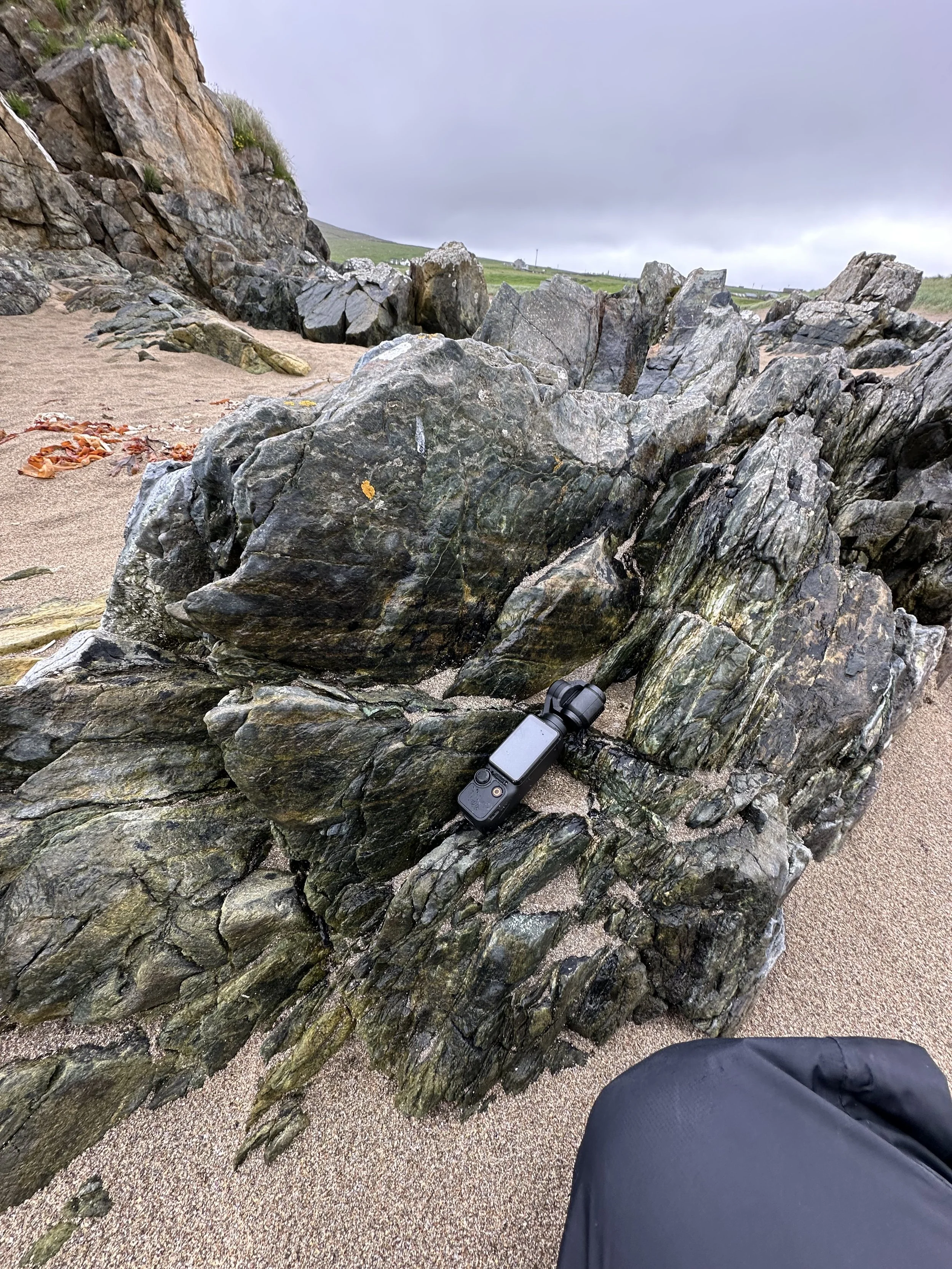
Walk Across the Earth's Mantle in Britain's Most Geologically Diverse Islands
Explore Scotland's northernmost islands through the eyes of a geologist, discovering ancient volcanoes, oceanic crust, the Earth's mantle and some of the oldest rocks in Europe.
Join me on an unforgettable six-day geological expedition to Shetland, where some of Scotland's oldest rocks meet spectacular coastlines, ancient volcanoes and one of the world's finest examples of oceanic crust and the Earth's mantle exposed at the surface.
From the moment you arrive in Lerwick, you'll journey through an extraordinary geological story spanning almost three billion years. We'll explore dramatic sea cliffs carved into ancient volcanic rocks, stand on rocks formed deep within the Earth's crust, walk across remnants of an ancient ocean floor, and even place our feet on rocks that once formed part of the Earth's mantle.
Shetland is unlike anywhere else in the UK. The islands preserve a remarkable record of mountain building, plate tectonics, volcanism, metamorphism and glaciation, making them one of the most fascinating places in Europe to understand how our planet works.
Over six days, we'll visit some of Shetland's most spectacular locations, including the towering cliffs of Eshaness, the world-famous Unst Ophiolite, St Ninian's Isle, Sumburgh Head and many hidden geological gems that reveal the incredible forces that shaped these islands over hundreds of millions of years.
This tour is designed for anyone with a curiosity about the Earth. Whether you're completely new to geology or already have experience, everything is explained in an engaging and accessible way. Expect plenty of opportunities to ask questions, examine rocks up close and discover the stories hidden within Shetland's landscapes.
Throughout the expedition you'll stay in comfortable accommodation in Lerwick, allowing us to explore the islands by day before returning each evening to relax, enjoy local food and continue our geological discussions.
Tour Highlights
Walk across rocks that once formed part of the Earth's mantle.
Explore one of Europe's best-preserved ophiolite complexes on the island of Unst.
Discover ancient volcanoes, mountain belts and spectacular sea cliffs.
Explore almost three billion years of Earth's history.
Stand on rocks that once formed part of the Earth's mantle.
Learn how plate tectonics built Shetland over hundreds of millions of years.
Small group experience with plenty of opportunities to ask questions and examine the rocks up close.
Stay in comfortable accommodation in Lerwick throughout the expedition.
Five nights' accommodation in Lerwick.
Guided throughout by Scottish Geologist.
This is far more than a sightseeing holiday. It's an immersive geological adventure that will completely change the way you see Shetland—and the Earth beneath your feet.
Itinerary
Day 1 – Welcome to Shetland
Arrival Day
Guests make their own way to Shetland via Sumburgh Airport or the overnight NorthLink ferry before meeting in Lerwick midday.
After checking into the hotel, we'll meet for a welcome presentation introducing the incredible geological history of Shetland and what we'll discover throughout the week.
We'll explore how these islands preserve almost three billion years of Earth's history and why Shetland is one of the most geologically important places in Europe.
Included
Hotel check-in
Welcome presentation
Geology basics
Meet the group
Evening meal (optional)
Geological overview
Day 2 – South Mainland
Volcanoes, Ancient Oceans & Viking Soapstone
Today we begin our journey through Shetland's geological story in the south of the mainland.
We'll explore pillow lavas erupted beneath an ancient ocean, discover remnants of oceanic crust preserved within the Dalradian rocks, visit Viking soapstone quarries, stand on Britain's largest active sand tombolo at St Ninian's Isle and finish the day at the spectacular cliffs of Sumburgh Head.
Highlights
Pillow lavas
Viking soapstone quarry
Serpentinite & steatite
Ancient ocean floor
St Ninian's Isle Tombolo
Volcanic-hosted mineralisation
Old red sandstone
Sumburgh Head
Fish fossils
Puffins (season dependent)
Day 3 – Building Scotland and shetland
Mountains, Metamorphism & Snowball Earth
Today we cross central Shetland, piecing together the collision of continents that built the Caledonian Mountains.
We'll examine spectacular metamorphic rocks, ancient marbles formed after global "Snowball Earth" glaciations, folded limestones, augen gneiss and major fault zones while learning how immense tectonic forces transformed these rocks deep within the Earth's crust.
Highlights
Caledonian mountain building
Metamorphic rocks
Snowball Earth marbles
Augen gneiss
Boudinage
Major fault systems
Glacial landscapes
Day 4 – Volcanoes & Faults
Eshaness and Northmavine
One of the highlights of the expedition.
We'll explore the spectacular cliffs of Northmavine, where ancient volcanoes meet the Atlantic Ocean.
Here we'll discover lava flows, volcanic intrusions, magma mixing, dramatic fault zones, evidence of the Great Glen Fault system and the volcanism related to the late stages of the Caledonian Orogeny
Highlights
Eshaness cliffs
Breawick Beach
Melby Faultline
Ancient volcanoes
Igneous intrusions
Magma mixing
The Walls Faultline
Mavis Grind
Day 5 – Walking Across the Earth's Mantle
Yell and Unst Expedition
Today we'll travel to Britain's most northerly island.
This is the geological highlight of the entire expedition.
The Unst Ophiolite preserves an extraordinary slice of ancient oceanic crust and the Earth's upper mantle, allowing us to walk through rocks that originally formed tens of kilometres beneath an ancient ocean.
We'll trace the journey from continental crust into oceanic crust and mantle rocks while discovering chromite deposits, serpentinite, gabbro and the Moho—the boundary between the Earth's crust and mantle.
Highlights
Two ferry crossings
The Unst Ophiolite
Mantle peridotite
Serpentinite
The Moho
Chromite workings
Continental–ocean boundary
Britain's most northerly geology
Day 6 – Farewell Shetland
After breakfast, it's time to say goodbye.
Whether you're travelling home by ferry or plane, you'll leave with a completely new understanding of Shetland's landscapes and the remarkable geological story hidden beneath your feet.
Please Note
The itinerary shown above is provisional and may be amended to take advantage of weather conditions, tides, ferry timetables and seasonal wildlife opportunities. The geological themes and overall experience will remain the same, but the order of locations may change to ensure you enjoy the very best of Shetland.
What to expect
This tour includes a mixture of short walks, scenic stops and geology interpretation throughout. Expect incredible landscapes, changeable weather, and lots of opportunities to stop for photos while learning the story behind the rocks.
Small group experience
Geology-focused guiding
Suitable for enthusiastic beginners and geology lovers alike
Scenic stops throughout
Relaxed, friendly and informative atmosphere
What’s Included?
5 nights accommodation in Lerwick with Breakfast included in a 3-4 star hotel with ensuite - dependant on what ticket you select at check out
5 days of guided geological touring
Transport throughout the tour from our meeting point in Lerwick
All inter-island ferry crossings
Expert geology interpretation by Scottish Geologist
Geological field guide and information pack
Evening meals included (food only)
Small group experience
What’s Not Included
Travel to and from Shetland
Flights or ferry to Shetland
Drinks not included
Lunches not included
Personal travel insurance
Optional activities outside the itinerary
Price
£1825.00pp with accommodation, breakfast and dinner included, guiding, transportation and geology information pack (meet us there in Lerwick).
£750.00pp meet us there without accommodation and meals included. Guiding and transportation only (meet us in Lerwick). This ticket is available to those who would like to sort their own accommodation and meals out or for those who live on the island.
Optional Extras
We will be pre-booking a limited number of 2027 overnight Northlink ferry tickets (including cabins) for one or two people, as soon as Northlink open bookings in the autumn of 2026 . Please book your tour place(s) online first, and if you would like us to book ferry tickets on your behalf, please enquire and request this by email. An extra fee will be associated with this depending on Northlink ferry availability and 2027 fees.
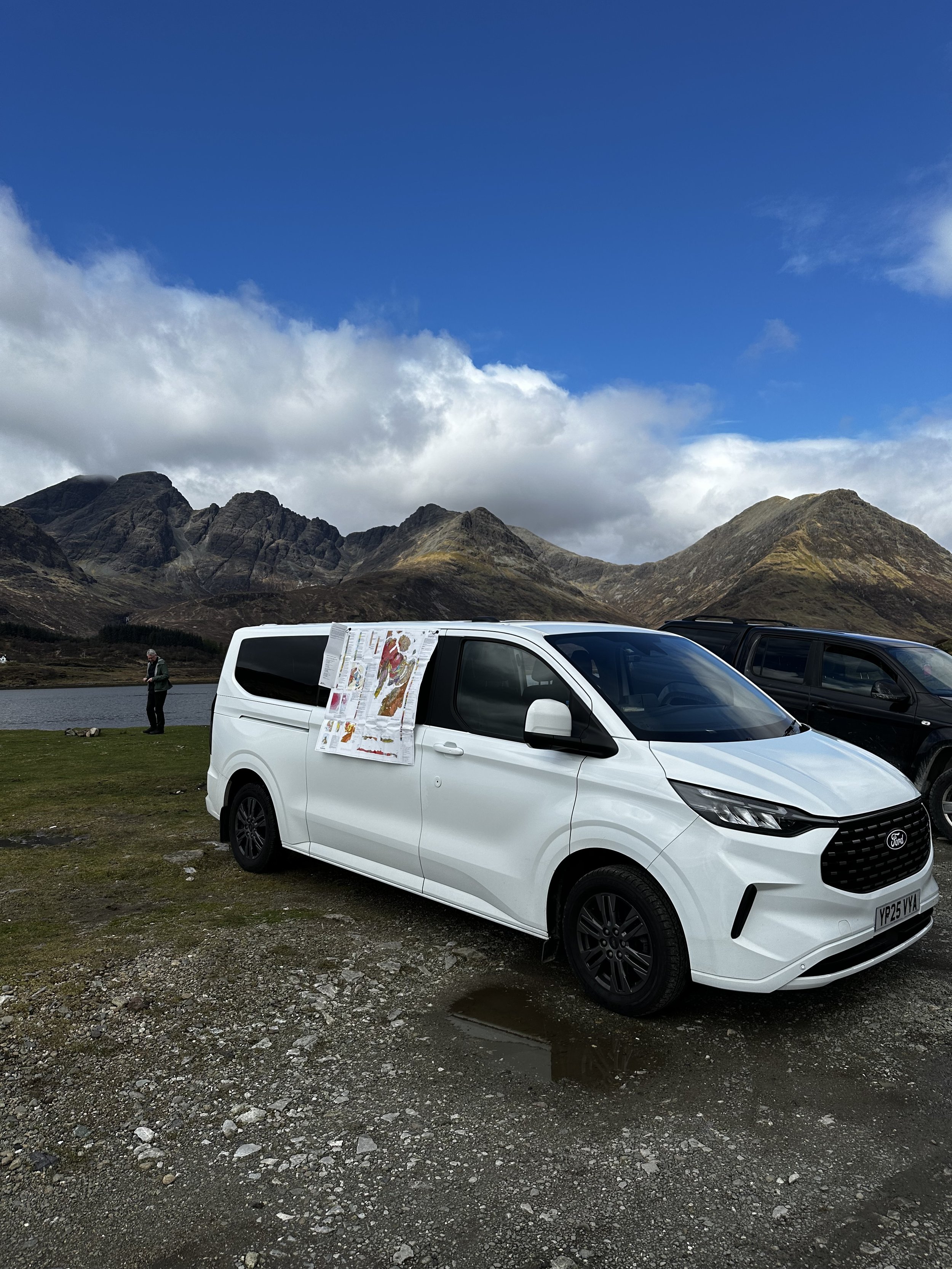
A 7-Day Geological Expedition Through Three Billion Years of Earth History
Discover why Scotland is recognised as the birthplace of modern geology on this unforgettable seven-day geological expedition across some of the country's most spectacular landscapes.
From the world-famous Siccar Point—where James Hutton revolutionised our understanding of Earth's immense age—to the ancient rocks of the Northwest Highlands, the dramatic volcanoes of Skye and the magnificent volcanic landscapes of Mull, this journey tells the complete geological story of Scotland.
Over seven days, we'll travel through almost three billion years of Earth's history, exploring the landscapes that inspired the science of geology itself. We'll stand on some of Europe's oldest rocks, unravel the story of ancient oceans and mountain-building events, discover where dinosaurs once roamed, and journey deep into the roots of giant volcanoes that formed as the North Atlantic Ocean began to open around 60 million years ago.
This expedition has been carefully designed to follow Scotland's geological history in chronological order, allowing you to experience the events that shaped our planet as they unfolded through time. Each day reveals another chapter in the incredible story of Scotland—from the formation of the ancient continental crust, through the collision of continents and the creation of the Highlands, to Jurassic tropical seas, dinosaurs and the spectacular volcanic landscapes of the Inner Hebrides.
Throughout the expedition, you'll explore some of Scotland's most iconic geological locations, including Siccar Point, the Northwest Highlands Geopark, the Isle of Skye, Iona, Staffa and the Isle of Mull. Along the way, you'll enjoy breathtaking scenery, comfortable accommodation and expert geological interpretation, with every stop designed to bring the landscape to life in an engaging and accessible way.
Whether you're completely new to geology or already have a passion for rocks and landscapes, this expedition is suitable for anyone with a curiosity about the natural world. Complex geological processes are explained in a relaxed, easy-to-understand style, with plenty of opportunities to ask questions, examine rocks up close and discover how Scotland became one of the most geologically important places on Earth.
This is far more than a sightseeing holiday—it's an immersive journey through deep time, following in the footsteps of the pioneers who transformed our understanding of the planet.
Tour Highlights
Follow Scotland's geological history through almost 3 billion years of Earth's history.
Visit Siccar Point, the birthplace of modern geology and home to Hutton's famous unconformity.
Explore the ancient Lewisian Gneiss, Torridonian Sandstone and Durness Limestone of the Northwest Highlands.
Discover the internationally famous Moine Thrust fault lines, one of the world's most important geological structures.
Journey to the Isle of Skye to explore Jurassic coastlines, dinosaur localities and spectacular volcanic landscapes.
Walk beside the famous Fairy Pools and learn how the Black Cuillin formed deep beneath an ancient volcano.
Enjoy a scenic boat trip to Loch Coruisk, surrounded by the dramatic peaks of the Black Cuillin.
Visit the sacred island of Iona and the world-famous basalt columns of Staffa and Fingal's Cave.
Explore the volcanic landscapes of the Isle of Mull, including magma chambers, lava flows and ring dykes.
Learn about plate tectonics, mountain building, volcanism, glaciation and the forces that shaped Scotland.
Travel in a small group with comfortable transport throughout the expedition.
Guided throughout by Scottish Geologist, making complex geology engaging, accessible and unforgettable.
This is far more than a sightseeing holiday. It's an immersive geological adventure that will completely change the way you see Scotland—and the Earth beneath your feet.
Itinerary
Day 1 – The Birthplace of Modern Geology
Siccar Point & East Lothian
Our expedition begins where geology itself was born.
We'll travel to Siccar Point, where James Hutton recognised the famous unconformity that transformed our understanding of Earth history. Standing where Hutton stood in 1788, we'll discover why this exposure became one of the most important geological sites in the world and introduced the concept of Deep Time.
We'll also explore the spectacular Carboniferous coastline around Dunbar, examining ancient volcanoes, sedimentary rocks and fossils before beginning our journey north.
Today's highlights
Pick up Glasgow 8:30am
Siccar Point
Hutton's Unconformity
Deep Time
Carboniferous volcanoes
East Lothian coastline
Introduction to Scotland's geological history
Overnight around Inverness
Day 2 – The North West Highlands
Gairloch and Wester Ross
Today we enter Scotland's oldest landscapes.
Travelling through Wester Ross, we'll discover Lewisian Gneiss that formed nearly 3 billion years ago, before examining the magnificent Torridonian Sandstone that records ancient rivers flowing across one of Earth's earliest continents.
We'll finish the day surrounded by the spectacular mountains of Torridon before continuing to Ullapool.
Highlights
Lewisian Gneiss
Gairloch
Magnetic rocks
Torridonian Sandstone
Ancient river systems
Precambrian Scotland
Mountain landscapes
Overnight in Ullapool.
Day 3 – The Northwest Highlands
Building a Mountain Belt
Today we'll explore one of the world's classic geological regions.
We'll discover the rocks and structures that helped prove plate tectonic theory, following the story of continental collision, mountain building and the famous Moine Thrust.
Possible locations
Knockan Crag
Moine Thrust
Assynt
Ardvreck Castle
Achmelvich
Durness
Today's geological story
Lewisian basement
Torridonian Sandstone
Cambrian quartzites
Durness Limestone
Moine rocks
Continental collision
Mountain building
Thrust faulting
Overnight in Ullapool.
Day 4 – Jurassic Scotland
Journey to the Isle of Skye
Today we travel to Skye and begin exploring one of Britain's richest geological landscapes.
We'll start with Jurassic sedimentary rocks that preserve tropical seas, fossil-bearing limestones and the environments that existed before Skye became volcanic.
Highlights
An Corran, Staffin
Jurassic limestones
Fossils
Ancient tropical seas
Kilt Rock
Quiraing
Arrival on Skye
Overnight on Skye
Day 5 – Into the Volcano
Today we journey into the heart of the Skye volcano.
We'll begin at the Fairy Pools surrounded by the towering Black Cuillin.
Here we'll explore the deep plumbing system of one of Britain's greatest volcanoes.
Highlights
Fairy Pools
Cuillin Gabbro
Black Cuillin
Magma chambers
Glacial landscapes
Travel to Mull in the afternoon.
Overnight on Mull.
Day 6 – Mull, Iona & Staffa
Ancient Continents and Volcanoes
Today we discover two completely different worlds.
We'll explore the ancient rocks of Iona before travelling by boat to Staffa to experience Fingal's Cave and its spectacular basalt columns.
Later we'll begin exploring the volcanic landscapes of Mull.
Highlights
Iona
Lewisian Gneiss
Staffa
Fingal's Cave
Columnar basalt
Mull lava flows
Puffins (season permitting)
Overnight on Mull.
Day 7 – Inside the Mull Volcano
Our final day explores the roots of another giant volcano.
We'll investigate the Mull Central Complex, discovering ring dykes, gabbro, granite and magma chambers before returning to Glasgow.
Throughout the journey home we'll bring together the geological story of Scotland—from the ancient rocks of the Precambrian to the volcanoes that shaped the west coast.
Highlights
Mull Central Complex
Gabbro
Granite
Caldera collapse
Geological summary of Scotland
Return to Glasgow
Why is this tour different?
This isn't simply a sightseeing holiday or a series of geological stops.
It's a carefully designed expedition through Scotland's geological history, taking you on a journey through almost three billion years of Earth's history in the country where modern geology was born.
Rather than visiting locations at random, each day builds on the last, revealing the events that shaped Scotland in the order they happened. You'll begin at Siccar Point, where James Hutton first recognised the immense age of our planet, before travelling through the ancient rocks of the Northwest Highlands, exploring the collision of continents that built the Scottish Highlands, and finally discovering the spectacular volcanoes of Skye and Mull that formed as the North Atlantic Ocean began to open.
Along the way, you'll visit many of Scotland's most iconic geological sites, but more importantly, you'll understand why they're there.
Every landscape has a story to tell.
You'll discover how ancient oceans opened and closed, how mountains rose and were eroded away, how dinosaurs once walked across tropical lagoons, and how enormous volcanoes shaped Scotland's west coast millions of years later.
By the end of the expedition, you'll no longer just see mountains, cliffs and coastlines—you'll understand the incredible processes that created them.
Unlike traditional field trips, this expedition has been designed for anyone with a curiosity about the natural world. Whether you're completely new to geology or already have experience, complex geological concepts are explained in an engaging, accessible and enjoyable way, with plenty of opportunities to ask questions, examine rocks up close and immerse yourself in Scotland's extraordinary landscapes.
This is more than a holiday. It's an opportunity to experience Scotland through the eyes of a geologist and discover why this remarkable country changed the way we understand our planet forever.
What to expect
Expect relaxed days filled with spectacular scenery, fascinating geology and plenty of opportunities to stop for photographs.
We'll combine short walks, boat trips, coastal sections and mountain viewpoints while gradually building the geological story throughout the week.
Every day introduces another chapter in the evolution of Scotland's ancient volcanoes.
Suitable for complete beginners as well as experienced geology enthusiasts.
Small group experience
Geology-focused guiding
Suitable for enthusiastic beginners and geology lovers alike
Scenic stops throughout
Relaxed, friendly and informative atmosphere
🚶 Average walking: 3–5 miles (5–8 km) per day
🥾 Terrain: Beaches, coastal paths, grassy tracks, rocky shorelines and occasional uneven ground.
⛰️ Difficulty: Moderate. Suitable for anyone with a reasonable level of fitness who is comfortable walking on uneven terrain.
📸 Pace: Relaxed, with frequent stops for photography, geology and wildlife.
What’s Included?
6 nights in accomodation (£2450 ticket) bed and breakfast or 3 star hotel with ensuite
7 days of guided geological touring
Transport throughout the tour from Glasgow, or meet us in Portree
All island ferry crossings/boat trips
Expert geology interpretation by Scottish Geologist
Geological field guide and information pack
Breakfast included
Small group experience
What’s Not Included
Drinks not included with meals
Personal travel insurance
Lunches and Dinner
Optional activities outside the itinerary
Price
£2,450 per person (Includes accommodation, transport during the expedition, ferry crossings, geological guiding and field materials.)
Early bird - £2,250 per person
We will confirm the running of this tour once 3 people book on.
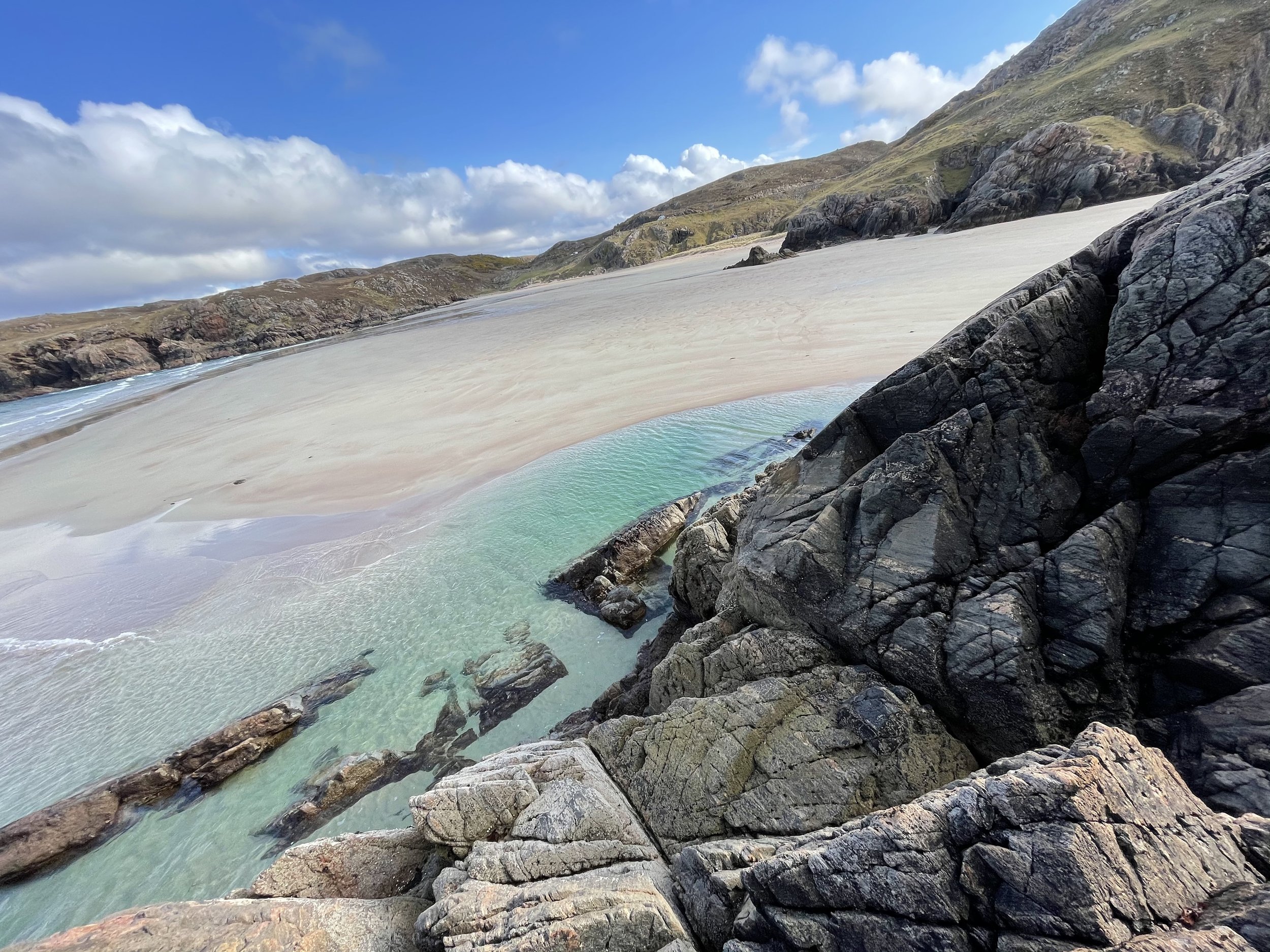
A 7-Day Geological Expedition Through Three Billion Years of Earth History
Discover why Scotland is recognised as the birthplace of modern geology on this unforgettable seven-day geological expedition across some of the country's most spectacular landscapes.
From the world-famous Siccar Point—where James Hutton revolutionised our understanding of Earth's immense age—to the ancient rocks of the Northwest Highlands, the dramatic volcanoes of Skye and the magnificent volcanic landscapes of Mull, this journey tells the complete geological story of Scotland.
Over seven days, we'll travel through almost three billion years of Earth's history, exploring the landscapes that inspired the science of geology itself. We'll stand on some of Europe's oldest rocks, unravel the story of ancient oceans and mountain-building events, discover where dinosaurs once roamed, and journey deep into the roots of giant volcanoes that formed as the North Atlantic Ocean began to open around 60 million years ago.
This expedition has been carefully designed to follow Scotland's geological history in chronological order, allowing you to experience the events that shaped our planet as they unfolded through time. Each day reveals another chapter in the incredible story of Scotland—from the formation of the ancient continental crust, through the collision of continents and the creation of the Highlands, to Jurassic tropical seas, dinosaurs and the spectacular volcanic landscapes of the Inner Hebrides.
Throughout the expedition, you'll explore some of Scotland's most iconic geological locations, including Siccar Point, the Northwest Highlands Geopark, the Isle of Skye, Iona, Staffa and the Isle of Mull. Along the way, you'll enjoy breathtaking scenery, comfortable accommodation and expert geological interpretation, with every stop designed to bring the landscape to life in an engaging and accessible way.
Whether you're completely new to geology or already have a passion for rocks and landscapes, this expedition is suitable for anyone with a curiosity about the natural world. Complex geological processes are explained in a relaxed, easy-to-understand style, with plenty of opportunities to ask questions, examine rocks up close and discover how Scotland became one of the most geologically important places on Earth.
This is far more than a sightseeing holiday—it's an immersive journey through deep time, following in the footsteps of the pioneers who transformed our understanding of the planet.
Tour Highlights
Follow Scotland's geological history through almost 3 billion years of Earth's history.
Visit Siccar Point, the birthplace of modern geology and home to Hutton's famous unconformity.
Explore the ancient Lewisian Gneiss, Torridonian Sandstone and Durness Limestone of the Northwest Highlands.
Discover the internationally famous Moine Thrust fault lines, one of the world's most important geological structures.
Journey to the Isle of Skye to explore Jurassic coastlines, dinosaur localities and spectacular volcanic landscapes.
Walk beside the famous Fairy Pools and learn how the Black Cuillin formed deep beneath an ancient volcano.
Enjoy a scenic boat trip to Loch Coruisk, surrounded by the dramatic peaks of the Black Cuillin.
Visit the sacred island of Iona and the world-famous basalt columns of Staffa and Fingal's Cave.
Explore the volcanic landscapes of the Isle of Mull, including magma chambers, lava flows and ring dykes.
Learn about plate tectonics, mountain building, volcanism, glaciation and the forces that shaped Scotland.
Travel in a small group with comfortable transport throughout the expedition.
Guided throughout by Scottish Geologist, making complex geology engaging, accessible and unforgettable.
This is far more than a sightseeing holiday. It's an immersive geological adventure that will completely change the way you see Scotland—and the Earth beneath your feet.
Itinerary
Day 1 – The Birthplace of Modern Geology
Siccar Point & East Lothian
Our expedition begins where geology itself was born.
We'll travel to Siccar Point, where James Hutton recognised the famous unconformity that transformed our understanding of Earth history. Standing where Hutton stood in 1788, we'll discover why this exposure became one of the most important geological sites in the world and introduced the concept of Deep Time.
We'll also explore the spectacular Carboniferous coastline around Dunbar, examining ancient volcanoes, sedimentary rocks and fossils before beginning our journey north.
Today's highlights
Pick up Glasgow 8:30am
Siccar Point
Hutton's Unconformity
Deep Time
Carboniferous volcanoes
East Lothian coastline
Introduction to Scotland's geological history
Overnight around Inverness
Day 2 – The North West Highlands
Gairloch and Wester Ross
Today we enter Scotland's oldest landscapes.
Travelling through Wester Ross, we'll discover Lewisian Gneiss that formed nearly 3 billion years ago, before examining the magnificent Torridonian Sandstone that records ancient rivers flowing across one of Earth's earliest continents.
We'll finish the day surrounded by the spectacular mountains of Torridon before continuing to Ullapool.
Highlights
Lewisian Gneiss
Gairloch
Magnetic rocks
Torridonian Sandstone
Ancient river systems
Precambrian Scotland
Mountain landscapes
Overnight in Ullapool.
Day 3 – The Northwest Highlands
Building a Mountain Belt
Today we'll explore one of the world's classic geological regions.
We'll discover the rocks and structures that helped prove plate tectonic theory, following the story of continental collision, mountain building and the famous Moine Thrust.
Possible locations
Knockan Crag
Moine Thrust
Assynt
Ardvreck Castle
Achmelvich
Durness
Today's geological story
Lewisian basement
Torridonian Sandstone
Cambrian quartzites
Durness Limestone
Moine rocks
Continental collision
Mountain building
Thrust faulting
Overnight in Ullapool.
Day 4 – Jurassic Scotland
Journey to the Isle of Skye
Today we travel to Skye and begin exploring one of Britain's richest geological landscapes.
We'll start with Jurassic sedimentary rocks that preserve tropical seas, fossil-bearing limestones and the environments that existed before Skye became volcanic.
Highlights
An Corran, Staffin
Jurassic limestones
Fossils
Ancient tropical seas
Kilt Rock
Quiraing
Arrival on Skye
Overnight on Skye
Day 5 – Into the Volcano
Today we journey into the heart of the Skye volcano.
We'll begin at the Fairy Pools surrounded by the towering Black Cuillin.
Here we'll explore the deep plumbing system of one of Britain's greatest volcanoes.
Highlights
Fairy Pools
Cuillin Gabbro
Black Cuillin
Magma chambers
Glacial landscapes
Travel to Mull in the afternoon.
Overnight on Mull.
Day 6 – Mull, Iona & Staffa
Ancient Continents and Volcanoes
Today we discover two completely different worlds.
We'll explore the ancient rocks of Iona before travelling by boat to Staffa to experience Fingal's Cave and its spectacular basalt columns.
Later we'll begin exploring the volcanic landscapes of Mull.
Highlights
Iona
Lewisian Gneiss
Staffa
Fingal's Cave
Columnar basalt
Mull lava flows
Puffins (season permitting)
Overnight on Mull.
Day 7 – Inside the Mull Volcano
Our final day explores the roots of another giant volcano.
We'll investigate the Mull Central Complex, discovering ring dykes, gabbro, granite and magma chambers before returning to Glasgow.
Throughout the journey home we'll bring together the geological story of Scotland—from the ancient rocks of the Precambrian to the volcanoes that shaped the west coast.
Highlights
Mull Central Complex
Gabbro
Granite
Caldera collapse
Geological summary of Scotland
Return to Glasgow
Why is this tour different?
This isn't simply a sightseeing holiday or a series of geological stops.
It's a carefully designed expedition through Scotland's geological history, taking you on a journey through almost three billion years of Earth's history in the country where modern geology was born.
Rather than visiting locations at random, each day builds on the last, revealing the events that shaped Scotland in the order they happened. You'll begin at Siccar Point, where James Hutton first recognised the immense age of our planet, before travelling through the ancient rocks of the Northwest Highlands, exploring the collision of continents that built the Scottish Highlands, and finally discovering the spectacular volcanoes of Skye and Mull that formed as the North Atlantic Ocean began to open.
Along the way, you'll visit many of Scotland's most iconic geological sites, but more importantly, you'll understand why they're there.
Every landscape has a story to tell.
You'll discover how ancient oceans opened and closed, how mountains rose and were eroded away, how dinosaurs once walked across tropical lagoons, and how enormous volcanoes shaped Scotland's west coast millions of years later.
By the end of the expedition, you'll no longer just see mountains, cliffs and coastlines—you'll understand the incredible processes that created them.
Unlike traditional field trips, this expedition has been designed for anyone with a curiosity about the natural world. Whether you're completely new to geology or already have experience, complex geological concepts are explained in an engaging, accessible and enjoyable way, with plenty of opportunities to ask questions, examine rocks up close and immerse yourself in Scotland's extraordinary landscapes.
This is more than a holiday. It's an opportunity to experience Scotland through the eyes of a geologist and discover why this remarkable country changed the way we understand our planet forever.
What to expect
Expect relaxed days filled with spectacular scenery, fascinating geology and plenty of opportunities to stop for photographs.
We'll combine short walks, boat trips, coastal sections and mountain viewpoints while gradually building the geological story throughout the week.
Every day introduces another chapter in the evolution of Scotland's ancient volcanoes.
Suitable for complete beginners as well as experienced geology enthusiasts.
Small group experience
Geology-focused guiding
Suitable for enthusiastic beginners and geology lovers alike
Scenic stops throughout
Relaxed, friendly and informative atmosphere
🚶 Average walking: 3–5 miles (5–8 km) per day
🥾 Terrain: Beaches, coastal paths, grassy tracks, rocky shorelines and occasional uneven ground.
⛰️ Difficulty: Moderate. Suitable for anyone with a reasonable level of fitness who is comfortable walking on uneven terrain.
📸 Pace: Relaxed, with frequent stops for photography, geology and wildlife.
What’s Included?
6 nights in accomodation (£2450 ticket) bed and breakfast or 3 star hotel with ensuite
7 days of guided geological touring
Transport throughout the tour from Glasgow, or meet us in Portree
All island ferry crossings/boat trips
Expert geology interpretation by Scottish Geologist
Geological field guide and information pack
Breakfast included
Small group experience
What’s Not Included
Drinks not included with meals
Personal travel insurance
Lunches and Dinner
Optional activities outside the itinerary
Price
£2,450 per person (Includes accommodation, transport during the expedition, ferry crossings, geological guiding and field materials.)
Early bird - £2,250 per person
We will confirm the running of this tour once 3 people book on.
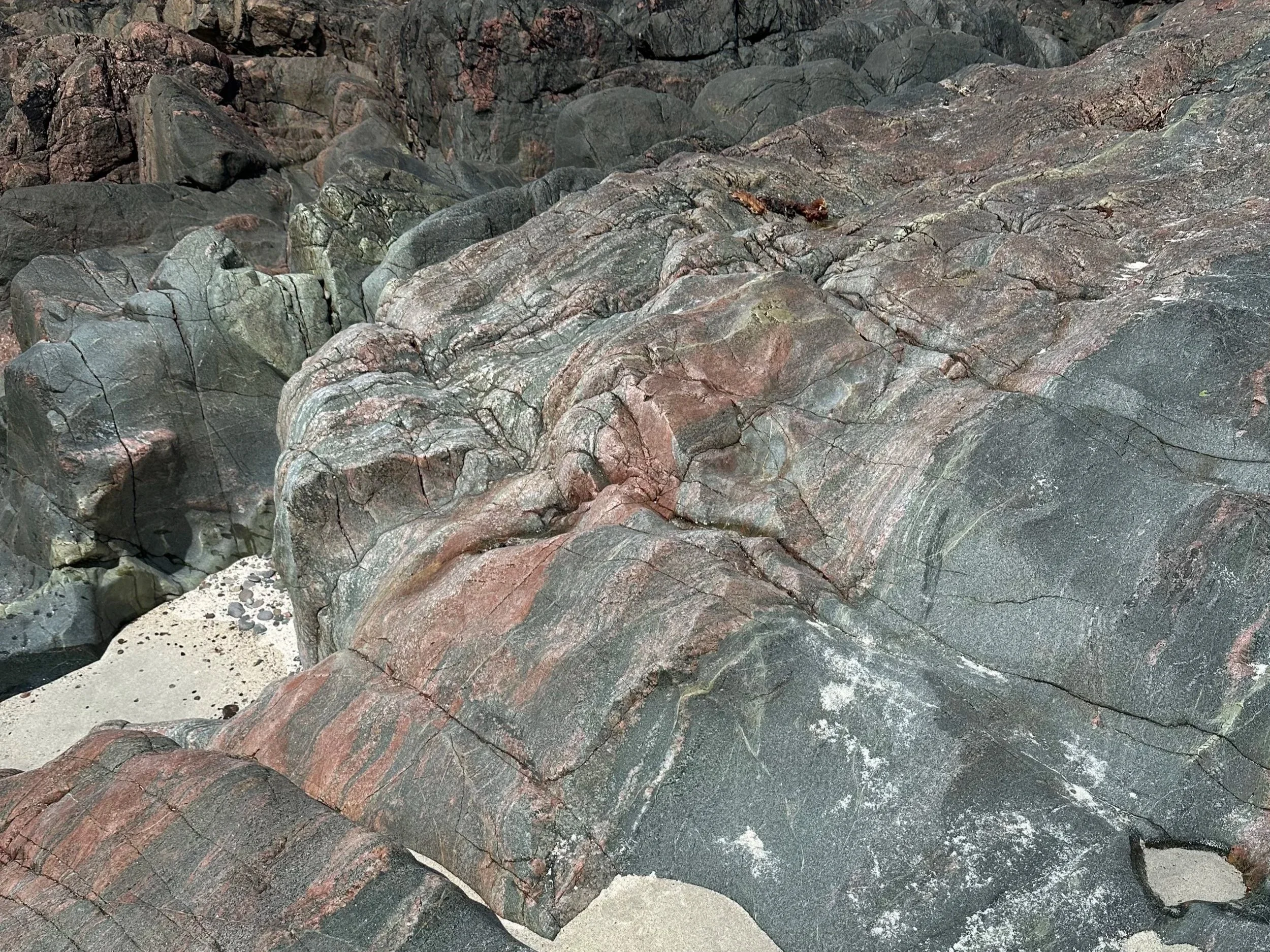
From the oldest to youngest rocks in Scotland
Explore the geology of Mull, Iona and Staffa through the eyes of a geologist, discovering ancient volcanoes, the roots of mountains, and some of the oldest rocks in Europe.
Join me on an unforgettable five-day geological expedition exploring one of the most spectacular volcanic landscapes in Europe.
From towering sea cliffs and lava plateaus to ancient magma chambers, ring dykes and world-famous basalt columns, this expedition uncovers the incredible geological story behind Mull, Iona, Staffa and Ardnamurchan.
Around 60 million years ago, western Scotland was transformed by immense volcanic activity as the North Atlantic Ocean began to open. Giant volcanoes erupted across the landscape, feeding vast lava fields and creating the rugged mountains and islands we see today.
Today, those volcanoes have long since disappeared, but their internal plumbing systems remain beautifully exposed, allowing us to walk through the roots of ancient volcanoes and discover how they once worked.
Whether you're completely new to geology or already have a passion for rocks, this expedition will help you understand these incredible landscapes in a completely new way.
Tour Highlights
Discover ancient volcanoes, mountain belts and spectacular sea cliffs.
Explore almost three billion years of Earth's history.
Visit Fingal's Cave and Staffa's spectacular basalt columns.
Discover Iona's famous Lewisian Gneiss.
Learn how giant volcanoes are built from the inside out.
Walk through lava flows, magma chambers and volcanic intrusions.
Small group experience with plenty of opportunities to ask questions and examine the rocks up close.
Four nights' accommodation on Mull.
Guided throughout by Scottish Geologist.
This is far more than a sightseeing holiday. It's an immersive geological adventure that will completely change the way you see Scotland—and the Earth beneath your feet.
Itinerary
Day 1 – Ancient Mountains and Metamorphic Rocks
Ardalanish and the Ross of Mull
Guests meet in Oban in the morning before travelling by ferry to Mull and continuing south to the Ross of Mull. To get to Oban you can get on trains from Glasgow central which take 2 hours 25 mins.
Our geological journey begins with some of the oldest rocks encountered during the expedition. At Ardalanish Bay, we’ll explore Moine metasedimentary rocks that began as ancient sands and muds before being buried, folded and transformed during major episodes of mountain building.
We’ll investigate the effects of regional metamorphism before examining how the later intrusion of the Ross of Mull Granite heated and altered the surrounding rocks. Ardalanish is particularly well known for its metamorphic minerals and provides the perfect place to introduce how temperature, pressure and magma can transform pre-existing rocks.
Highlights
Ferry from Oban to Mull
Ardalanish Bay
Moine metamorphic rocks
Psammite, semipelite and pelite
Folding and deformation
Regional metamorphism
Contact metamorphism
Kyanite, andalusite and sillimanite
Ross of Mull Granite
Welcome evening and introduction to the expedition
This gives you a strong opening because guests begin with the rocks that existed long before Mull’s volcanoes formed.
Day 2 – Ancient Crust Meets a Volcanic Island
Iona and Staffa
Today we continue through geological time by exploring two islands that preserve dramatically different chapters in Scotland’s history.
We’ll first cross to Iona, where ancient gneisses, metamorphic rocks and granitic intrusions reveal the island’s deep geological foundations. We’ll examine how these rocks relate to the ancient continental crust exposed elsewhere along Scotland’s northwest margin.
Later, weather permitting, we’ll travel by boat to Staffa. Here, the geological story jumps forward to around 60 million years ago, when basaltic lava erupted during the opening of the North Atlantic.
At Staffa, we’ll explore the world-famous basalt columns and Fingal’s Cave, learning how thick lava flows cooled, contracted and fractured into their remarkable polygonal shapes.
Highlights
Ferry to Iona
Ancient continental rocks
Lewiston Gneiss and metamorphic rocks
Granitic intrusions
Boat trip to Staffa
Fingal’s Cave
Columnar basalt
Lava cooling and contraction
Coastal erosion
Puffins, depending on season
Iona Abby
Day 3 – A Lost Forest Beneath the Lava
MacCulloch’s Fossil Tree
Today we move fully into Mull’s volcanic story.
We’ll travel by private boat along Mull’s spectacular western coastline towards the remote Ardmeanach Peninsula. From the sea, we’ll be able to examine the enormous succession of basalt lava flows that built the early Mull volcano.
Our aim will be to visit MacCulloch’s Fossil Tree, subject to safe sea and landing conditions. The site preserves the mould of a tree that was engulfed by lava around 60 million years ago, providing extraordinary evidence that forests became established between successive volcanic eruptions.
This day reveals that Mull’s lava plateau was not formed in one catastrophic event. Instead, eruption followed eruption, with periods of calm in between when soils developed and vegetation returned.
Highlights
Private coastal boat expedition
Ardmeanach Peninsula
MacCulloch’s Fossil Tree
Successive basalt lava flows
Fossil soils between eruptions
Evidence of ancient forests
Columnar jointing
Volcanic cliffs
Coastal geomorphology
Please note that landing beside the fossil tree is dependent on weather, sea and tidal conditions.
Day 4 – Inside the Mull Volcano
Magma Chambers, Ring Dykes and Caldera Collapse
After exploring the lava fields, we now travel deeper into the volcanic system.
Today we enter the eroded heart of the Mull Central Complex, where millions of years of erosion have exposed rocks that originally crystallised beneath the volcano.
We’ll investigate how magma moved through the crust, how repeated intrusions built the volcanic centre and how collapse structures controlled the emplacement of later magma.
Locations
Glen More
Loch Ba
Loch Ba Ring Dyke
Ben More viewpoints
Gribun
Accessible parts of the Mull Central Complex
Day 5 – Fire, Ice and the Modern Landscape
Final Mull Exploration and Return to Oban
Our final day brings together the geological story of the entire expedition.
We’ll explore an additional part of Mull’s volcanic landscape, choosing the best locations according to weather, access and the group’s interests. This could include lava flows, dykes, coastal features or viewpoints across the central volcanic complex.
We’ll also examine how glaciers and the modern Atlantic coastline have reshaped the ancient rocks and volcanic structures encountered throughout the week.
We’ll then return to Craignure for the ferry back to Oban.
Highlights
Final volcanic locality
Glacial erosion
Coastal landscape development
Review of Mull’s geological timeline
Ferry back to Oban
End of the expedition
Why is this tour different?
This isn't simply a sightseeing tour of Scotland's west coast.
It's a journey inside an ancient volcano.
Over five days you'll discover how volcanoes erupt, how magma moves through the crust and how millions of years of erosion have exposed the hidden plumbing system beneath one of Britain's greatest volcanic provinces.
By the end of the expedition you'll understand not only how Mull, Staffa and Ardnamurchan formed—but how volcanoes work anywhere on Earth.
What to expect
Expect relaxed days filled with spectacular scenery, fascinating geology and plenty of opportunities to stop for photographs.
We'll combine short walks, boat trips, coastal sections and mountain viewpoints while gradually building the geological story throughout the week.
Every day introduces another chapter in the evolution of Scotland's ancient volcanoes.
Suitable for complete beginners as well as experienced geology enthusiasts.
Small group experience
Geology-focused guiding
Suitable for enthusiastic beginners and geology lovers alike
Scenic stops throughout
Relaxed, friendly and informative atmosphere
🚶 Average walking: 3–5 miles (5–8 km) per day
🥾 Terrain: Beaches, coastal paths, grassy tracks, rocky shorelines and occasional uneven ground.
⛰️ Difficulty: Moderate. Suitable for anyone with a reasonable level of fitness who is comfortable walking on uneven terrain.
📸 Pace: Relaxed, with frequent stops for photography, geology and wildlife.
What’s Included?
4 nights in self catering accommodation with shared bathrooms on Isle of Mull - 2 Twins, 2 doubles and and 2 single rooms available with 2 bathrooms shared between 2 separate self catering apartments. Please note that everyone will get a separate room, double rooms are reserved for couples that book on and twins for two friends who are happy to share.
5 days of guided geological touring
Transport throughout the tour from Oban
All inter-island ferry crossings
Expert geology interpretation by Scottish Geologist
Geological field guide and information pack
Breakfast, lunch and evening meals included at separate restaurants throughout the trip depending on where we are visiting (food only)
Small group experience
What’s Not Included
Drinks not included with meals
Travel to and from Oban (It’s easier to get the train however, if you would like transport from Glasgow with Luisa please email and enquire).
Personal travel insurance
Optional activities outside the itinerary
Price
From £1,750 per person
Includes accommodation, transport during the expedition, ferry crossings, boat trip to Staffa (weather permitting), private boat to McCullocks Tree (weather permitting), Meals, geological guiding and field materials.
We will confirm the running of this tour once 3 people book on.
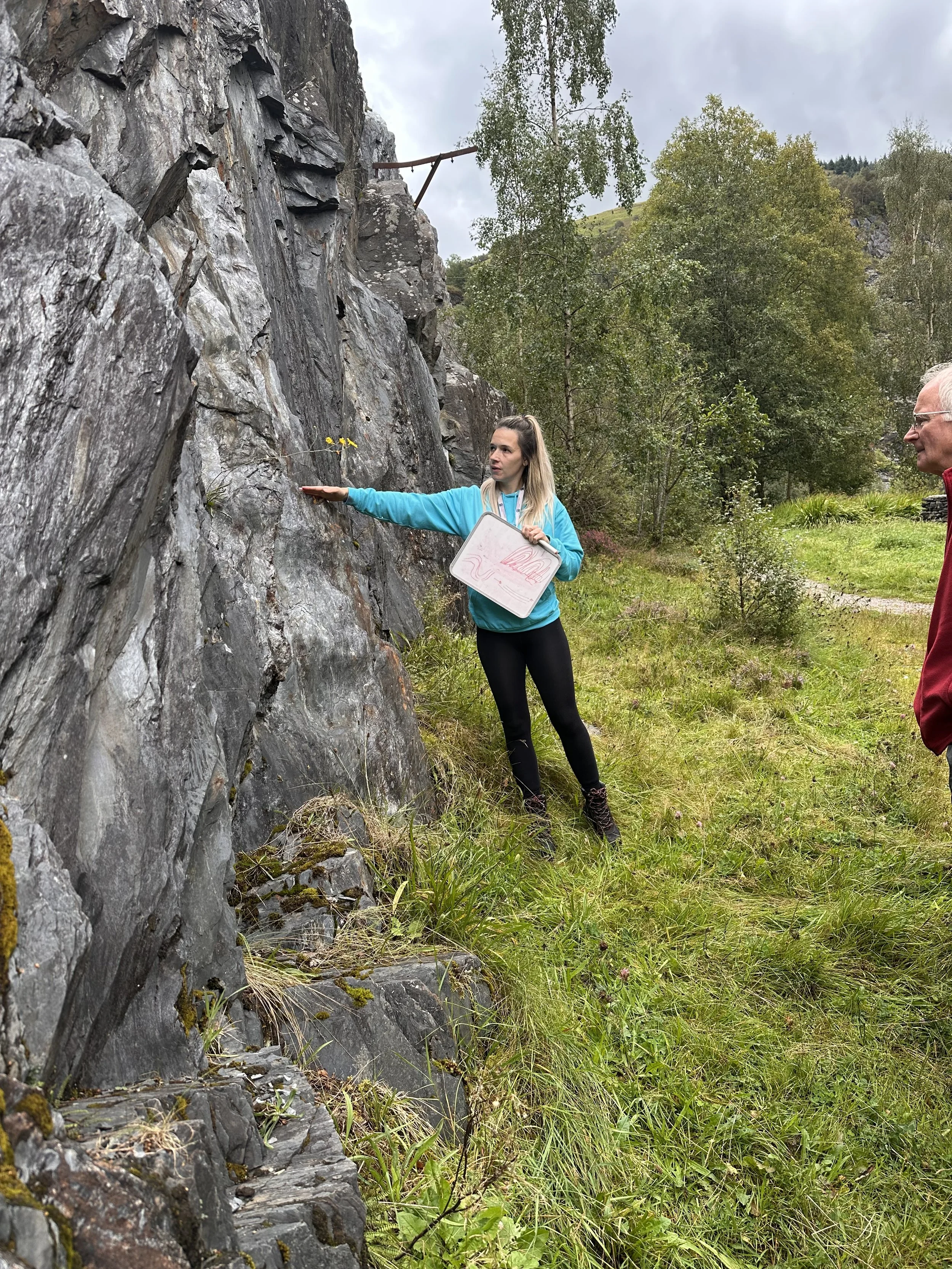
Scot Rock Walks -
Scottish Geology Tours
Want to explore Scotland’s geology with me? interested in learning about the geological history of Scotland and the different rock types you can find?
Come along and explore Scotland’s geology today!!
Upcoming afternoon/evening Geology Tours
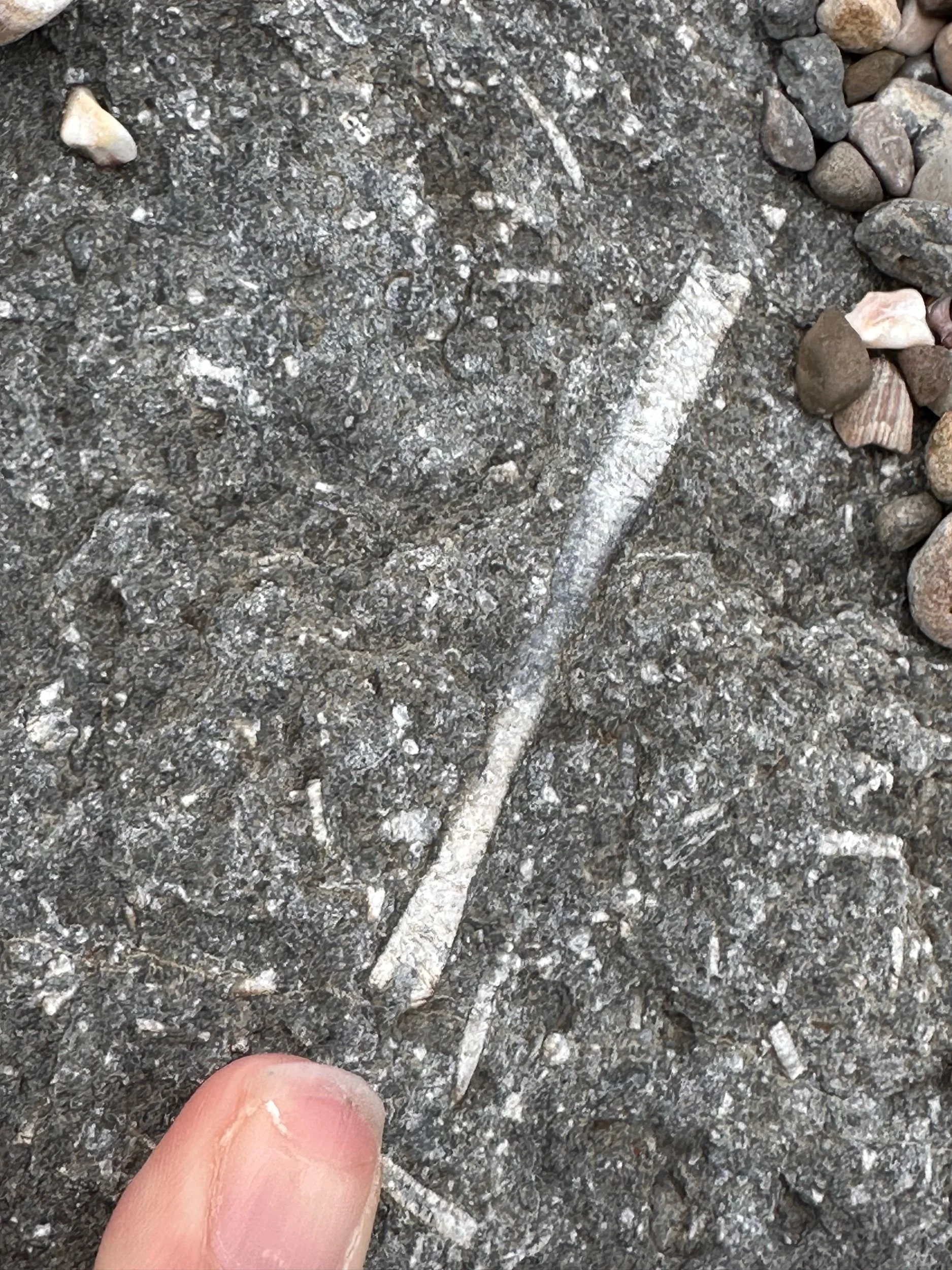
Ancient Seas & Fossil Reefs: A Geology Tour of Barns Ness with @ScottishGeologist
Join @ScottishGeologist for a beautifully focused coastal geology tour at Barns Ness, one of the best places in Scotland to explore the Lower Limestone Formation and step into a tropical sea from 340 million years ago. This is a fossil-rich site where the story is all about life, sedimentation, and changing environments—perfectly exposed across wide, accessible rock platforms.
What to Expect
🪨 The Lower Limestone Formation
Walk across well-exposed layers of the Lower Limestone Formation (Carboniferous).
See alternating beds of limestone, shale, and sandstone, recording repeated shifts between marine and coastal environments.
Learn how these cycles reflect changing sea levels, with warm shallow seas advancing and retreating over time.
🦴 Fossils from a Tropical Sea
Discover an abundance of marine fossils, including:
Corals 🪸
Crinoid fragments (sea lilies)
Brachiopods and bivalves
Learn how these organisms lived in clear, shallow, warm waters, very different from Scotland today.
Understand how fossil assemblages help geologists reconstruct ancient ecosystems.
🌊 Limestone Beds & Fossil Horizons
Identify distinct fossil-rich limestone layers, often packed with broken shells and skeletal debris.
See how quieter periods allowed fine muds to settle, forming shales between limestone beds.
Learn to recognise bedding planes and fossil concentrations that mark key environmental changes.
🏝️ Changing Environments Through Time
Reconstruct the Carboniferous landscape:
Tropical seas → lagoons → coastal plains → back to marine conditionsUnderstand how these repeating conditions created the layered geology seen today.
Link these cycles to global sea-level change and tectonic activity.
🌊 Coastal Exposure & Modern Processes
Walk across expansive wave-cut platforms, where the sea has revealed continuous rock layers.
See how erosion naturally “cuts” through the geology, exposing fossils and bedding structures.
Observe how modern coastal processes continue to shape and reveal the site.
👣 Hands-On Fossil & Rock Exploration
Learn how to spot fossils in the field and identify key fossil groups.
Practice reading sedimentary layers and environmental changes.
Try simple field sketches to capture fossil beds and rock sequences.
Who Should Attend?
Perfect for fossil lovers, families, students, and beginners, geology enthusiasts
Ideal if you want a clear, accessible introduction to sedimentary geology
Great for anyone interested in ancient life and past environments
Event Details
📍 Location: Barns Ness, near Dunbar, East Lothian
🗓️ Date: Sunday 1st November 2026 13:00-15:00
⏰ Duration: 2 hours
🎟️ Price: £25pp meet us there, £45 pick up from Glasgow
🥾 Terrain: Flat coastal rock platforms (best at low tide), rock scrambling, beach paths, tidal terrain
Why Join This Tour?
Led by @ScottishGeologist, this tour strips geology back to one of its most fascinating themes—life in deep time. Barns Ness is a place where you can stand on an ancient seabed, see the fossils of the creatures that lived there, and understand how environments changed over millions of years.

Walk Through Deep Time: A Geology Tour of Holyrood Park, Edinburgh with @ScottishGeologist
Join @ScottishGeologist for an unforgettable geology tour of Holyrood Park, home to Arthurs Seat, Salisbury Crags, and some of the most spectacular volcanic landscapes in Scotland. Explore the story of fire and ice that shaped Edinburghs dramatic scenery, from ancient eruptions to Ice Age sculpting. Whether you’re a geology enthusiast, a nature lover, or simply curious, this tour will reveal the deep history beneath your feet.
What to Expect
🌋 Explore an Ancient Volcano
Step onto the remains of Arthurs Seat, an extinct volcano that erupted over 340 million years ago during the Carboniferous period. Learn about the forces that shaped this once-mighty volcano and how it became the heart of Edinburghs landscape.
🪨 Discover Huttons Influence on Modern Geology
Visit Salisbury Crags, a key site in geological history where James Hutton, the father of modern geology, studied the igneous intrusions that helped prove his revolutionary theories about deep time and the Earths dynamic processes.
❄️ Glacial Sculpting and Ice Age Features
See how Ice Age glaciers carved the landscape, creating the distinctive ridge of Salisbury Crags and the crag-and-tail formation of Arthurs Seat that protected the foundations of Edinburgh Castle.
🪨 Rock Exploration
Examine ancient sedimentary rocks around Holyrood Park that contain traces of prehistoric life. Learn how the changing environments of Scotlands past from volcanic islands to tropical swamps are recorded in the rocks.
Guided Walk Through Edinburghs Natural History
Enjoy a scenic and informative walk through the park, with hands-on geology activities, rock identification, and expert interpretation of the landscapes hidden history.
Who Should Attend?
This tour is perfect for geology enthusiasts, students, hikers, and anyone with an interest in Edinburghs natural and scientific heritage. No prior knowledge is needed just bring your curiosity and comfortable walking shoes!
Event Details
Location: Holyrood Park, Edinburgh
Date: Sunday 6th December 2026 12:00-14:00
Time: 12:00-14:00
Price: meet us there - £25pp
Transport from Glasgow - £40pp
Why Join This Tour?
Led by the experienced @ScottishGeologist, this tour offers a unique opportunity to explore the geological wonders of Edinburgh, connecting science, history, and breathtaking landscapes. From volcanic eruptions to glacial forces, Holyrood Park is a natural time capsule waiting to be explored.
A guided geology tour around Arthur’s Seat offers a fascinating journey through the region’s volcanic and sedimentary history. During the tour, you explore the extinct volcano that forms the iconic hill, learn about the rock formations, and discover how volcanic activity shaped the landscape 340 million years ago. The guide also covers the historical significance of the area, including James Hutton’s groundbreaking work, which contributed to the foundations of modern geology.
The tour typically takes about two hours, with options for a more strenuous climb to the summit or a lower-level route for those preferring an easier walk. Key geological features include the volcanic basalt layers and sedimentary formations, which reveal ancient environments such as shallow lagoons and volcanic eruptions.
However, there are some risks associated with the tour:
1. Rough Terrain: The paths can be uneven, especially near the summit and rocky sections, posing risks of slips or trips, particularly in wet or windy conditions.
2. Weather Conditions: Edinburgh’s weather can change rapidly, making the higher elevations exposed to strong winds, rain, or fog, which can reduce visibility and increase the risk of accidents.
3. Steep Slopes: The ascent to the summit involves steep climbs, which might be challenging for people with limited mobility or fitness levels.
4. Footwear and Clothing: Without proper footwear and warm, waterproof clothing, participants could face discomfort or injury due to cold or wet conditions.

Volcanoes, Sea Cliffs, and Ancient Landscapes: A Geology Tour of Dunbar with @ScottishGeologist
Join @ScottishGeologist for a fascinating geology tour of Dunbar, East Lothian—where dramatic sea cliffs, ancient volcanic rocks, and striking sedimentary layers reveal a story that stretches back hundreds of millions of years. Dunbar offers one of the best accessible coastal geology sites in Scotland, combining bold scenery with evidence of volcanic eruptions, desert environments, and tectonic uplift.
What to Expect
🌋 Explore Ancient Volcanic Rocks
Walk along Dunbar’s rugged coastline and see the remains of ancient volcanoes that erupted during the Devonian Period, around 360 million years ago. These include striking basalt and andesite lava flows, as well as volcanic ash layers that help reconstruct the explosive past of this region.
🏜️ Sand Dunes and Riverbeds of a Bygone Desert
See beautifully preserved red sandstones and conglomerates, which formed in a semi-arid river system when this part of Scotland lay near the equator. You’ll learn to identify cross-bedding, channel features, and even fossil soil horizons—all clues to Dunbar’s ancient desert-like conditions.
🌊 Erosion and Sea Cliff Formation
Observe how ongoing marine erosion is sculpting the cliffs today. Learn how softer rocks are worn away faster than the harder volcanic ones, creating features like sea stacks and wave-cut platforms—perfect examples of dynamic coastal geomorphology.
🧭 Guided Coastal Walk
Take a guided walk along the John Muir Country Park and surrounding coastline, stopping at key outcrops to discuss:
Volcanic rock textures
Sedimentary structures
Geological faults and unconformities
The influence of geology on human history and land use
📚 Geology Meets History
Hear how Dunbar’s rocks were used in historic buildings, and how geology influenced the development of the town. Even the castle ruins are built into a sea stack of volcanic rock!
Who Should Attend?
This tour is ideal for:
Geology enthusiasts and students
Families and curious beginners
Nature lovers and walkers
No prior geological experience is needed—just an interest in Scotland’s ancient story and comfortable walking shoes.
Event Details
📍 Location: Dunbar, East Lothian
🗓️ Date: Sunday 1st November 2026
⏰ Time: 10:00-12:00
🎟️ Price: meet us there £25pp, transport from Glasgow £45
Distance: 2-3kms
Accessibility and terrain: local paths, muddy paths, rough muddy terrain, some areas where beach walking over pebbles and rocks (rock scrambling).
Why Join This Tour?
Led by @ScottishGeologist, this engaging, hands-on tour will change the way you see landscapes forever. Dunbar offers the perfect natural laboratory for exploring deep time, volcanic activity, desert geology, and coastal change—all within a short walk from the town centre.
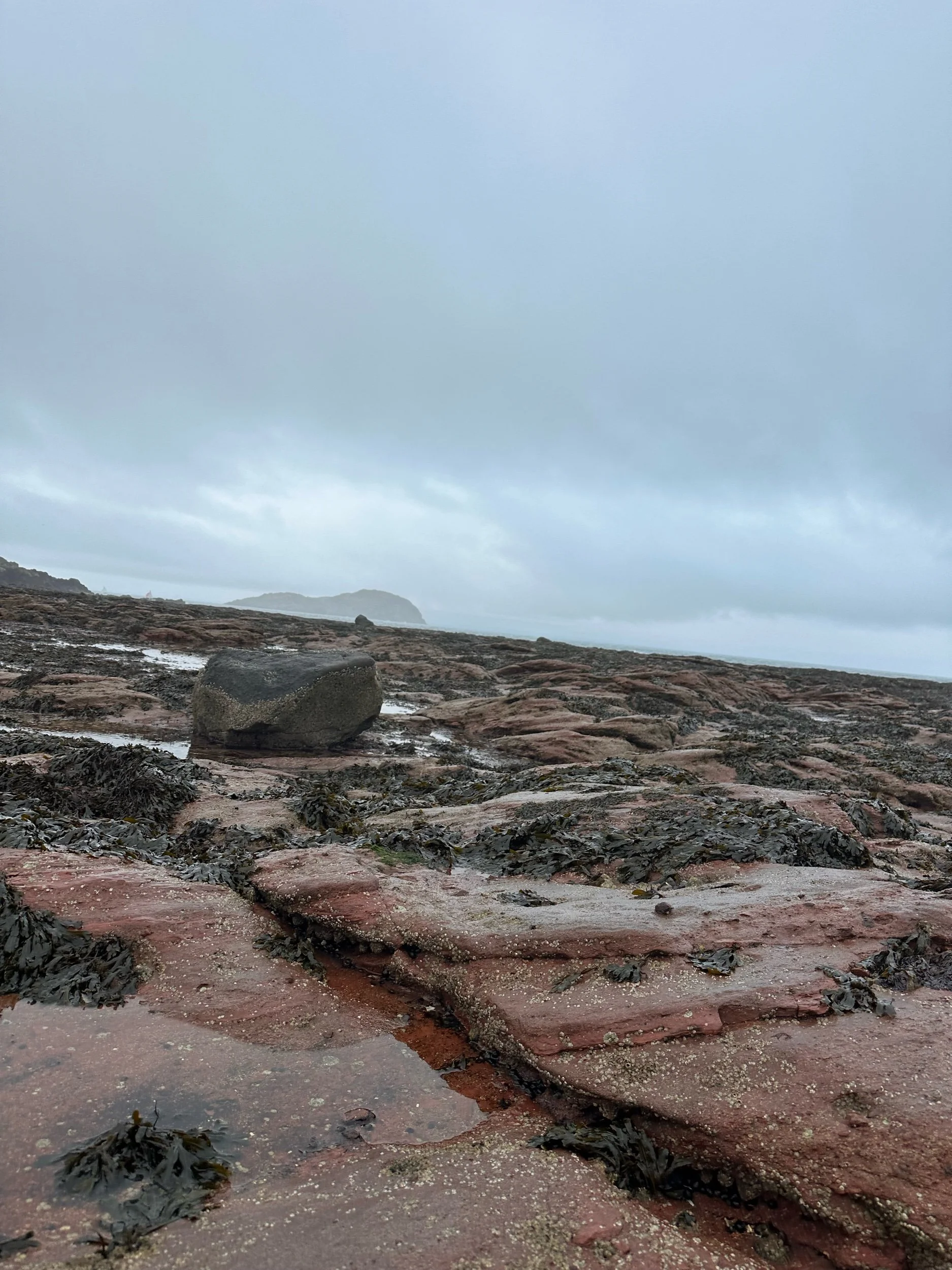
Volcanoes by the Sea: A Geology Tour of North Berwick with @ScottishGeologist
Join @ScottishGeologist on a coastal geology tour of North Berwick, where ancient volcanoes meet sandy beaches and tidal platforms reveal a dramatic geological past. With views to Bass Rock and the Firth of Forth, this accessible field trip brings to life the Carboniferous volcanic landscape of East Lothian — once home to lava fields, tropical swamps, and shallow seas.
What to Expect
🌋 Explore a Volcanic Past
Walk across the eroded remains of a Carboniferous volcano, with excellent exposures of basaltic lava, volcaniclastic rocks, and tuffs.
Learn how North Berwick Law, Bass Rock, and Craigleith are all volcanic plugs — the solidified centres of ancient volcanoes that once dominated the region ~340 million years ago.
Identify classic features of igneous intrusions, including columnar jointing, baked contacts, and chilled margins.
Look for different types of volcanic rocks
🌊 Dynamic Coastal Features
Explore tidal platforms, wave-cut benches, and sea stacks, where erosion exposes some of the best rock outcrops in East Lothian.
Observe how modern processes like wave erosion continue to shape the rocks and sediment today.
Discover how geology influences the layout of the coastline, harbours, and natural defences.
🧭 Iconic Viewpoints and Landforms
Get panoramic views of Bass Rock — a volcanic plug now home to thousands of seabirds — and learn about its geology and history.
See how local landforms like The Law, Craigleith, and Fidra are all geologically connected.
Understand how volcanic activity in the Carboniferous created the chain of plugs stretching across the Firth of Forth.
👣 Hands-On Exploration
Try identifying igneous textures (fine- vs coarse-grained), sedimentary bedding, and fossils in the field.
Use simple tools (like hand lenses) to interpret rock relationships and discuss how geologists reconstruct past environments.
Enjoy interactive discussions on how volcanism, sedimentation, and sea-level changes all left their mark on North Berwick’s rocks.
Who Should Attend?
Great for beginners, families, students, and geology enthusiasts of all levels.
Especially suited to those interested in volcanology, fossils, and Scottish coastal geology.
The route is mostly flat and walkable, with optional rocky shore sections depending on tides.
Event Details
📍 Location: North Berwick, East Lothian
🗓️ Date: Sunday 29th November 2026
⏰ Duration: 12:00-24:30
🎟️ Price: £25 pp meet us there. £45 pick up from Glasgow
🥾 Accessibility & Distance: Mostly coastal paths and beach: some optional walking on rock platforms at low tide. 2 to 3 miles depending on route.
Why Join This Tour?
Led by the engaging and knowledgeable @ScottishGeologist, this tour lets you walk across ancient volcanoes, hunt for fossils, and read the landscape like a geologist. North Berwick offers a stunning blend of natural beauty, geological significance, and accessible coastal geology, perfect for a fun and educational day out.
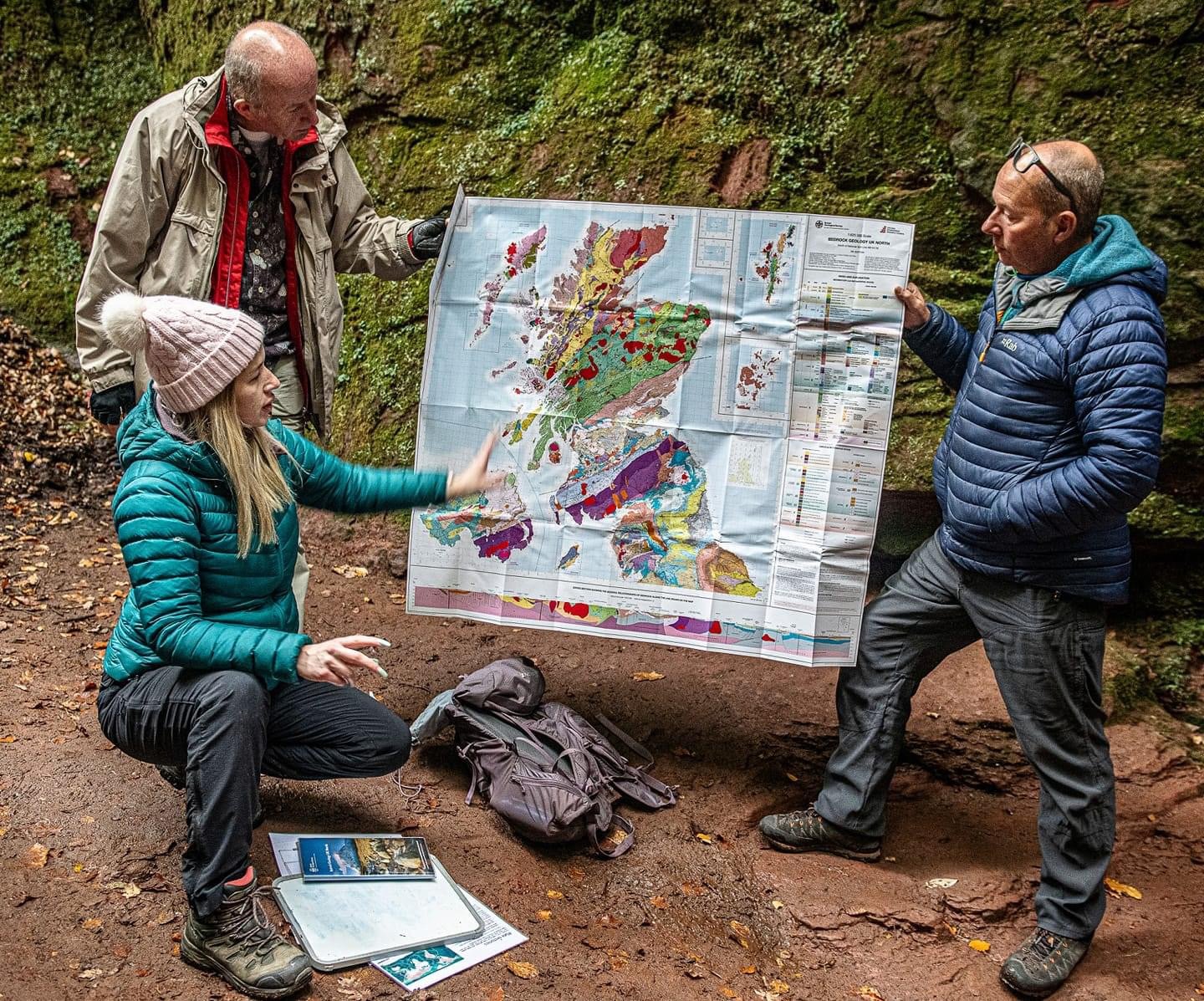
Why is this place so red? How has this natural gorge formed?
Am gonna tell you…
Join us on an unforgettable geology tour to the Devil's Pulpit, an enchanting natural gorge located in the heart of the Scottish countryside, just outside Glasgow. This tour takes you through the striking Finnich Glen, where the Devil's Pulpit—a mysterious rock formation—rises dramatically from the rushing red-tinted waters of the Carnock Burn.
As we explore this stunning site, you’ll discover the unique geological history of the area, carved over millions of years by water erosion. You’ll learn about the significance of the exposed layers of Old Red Sandstone, formed during the Devonian period 400 million years ago, which provide a fascinating window into the ancient landscapes and climate of Scotland.
The rich red hue of the water, caused by the iron oxide present in the rock, creates an otherworldly atmosphere, making this site not only a geologic marvel but also steeped in local legends.
This moderate hike involves a descent into the gorge via a steep set of steps carved into the stone, so be prepared for a little adventure! Comfortable walking shoes and swimming shoes (if your wanting to have a wee paddle) and a sense of wonder are all you need to fully experience the awe-inspiring geology of this hidden gem near Glasgow.
Perfect for nature lovers, geology enthusiasts, and photographers alike, this tour will leave you with a deeper appreciation for the beauty and power of Scotland’s natural landscapes.
Meeting point at 12:00 - Devils Pulpit Car park - https://maps.app.goo.gl/5kKP9SvEz3ScJKRz6?g_st=ic - please note this car park gets busy therefore we would suggest getting here early.
Transport from Glasgow at 11:00 from Costa Coffee, 50 George square, Glasgow, G2 1EH - https://maps.app.goo.gl/EhdJuRyH2TGe8jie8?g_st=ic
Exploring Finnich Glen, also known as the Devil’s Pulpit, offers a unique geological experience but comes with several risks that participants should be aware of:
1. Steep and Slippery Terrain: The descent into the gorge involves navigating the “Devil’s Steps,” a steep and often slippery staircase. These steps can be particularly hazardous after rainfall, increasing the risk of slips and falls.
2. Unstable Ground: The gorge’s floor is uneven, with loose rocks and muddy patches that can cause tripping or twisting injuries. Proper footwear with good grip is essential to mitigate this risk.
3. Water Hazards: The Carnock Burn runs through the glen, and its depth can vary. Wading through the water is often necessary to explore certain areas, which can be slippery and may conceal submerged obstacles.
4. Falling Debris: The gorge’s steep walls can be prone to loose rocks, especially after heavy rain or freeze-thaw cycles, posing a risk of falling debris.
5. Limited Accessibility: The challenging terrain may not be suitable for individuals with mobility issues or certain health conditions. The steep descent and ascent require a reasonable level of fitness.
6. Remote Location: The area has limited mobile phone reception, which can hinder communication in case of emergencies. It’s important to inform someone of your plans and expected return time.
7. Environmental Impact: Overcrowding and off-path exploration can lead to erosion and damage to the delicate ecosystem. Visitors should stick to established paths and follow Leave No Trace principles to preserve the area’s natural beauty.
By being aware of these risks and taking appropriate precautions, participants can enjoy a safe and enriching geological tour of Finnich Glen.
Information sheet will be sent out a few days before the tour.
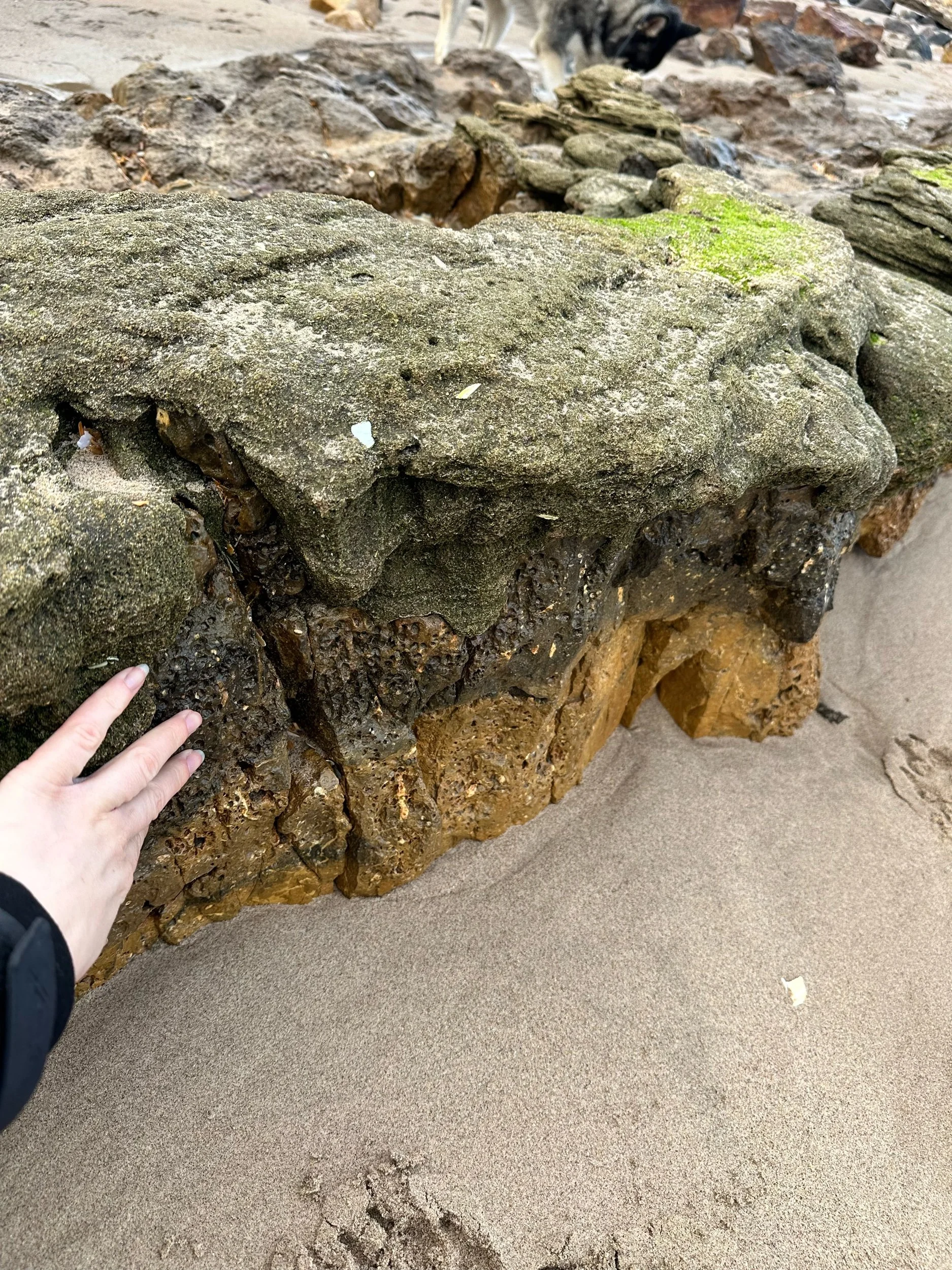
Volcanoes, Beaches & Ancient Seas: A Geology Tour of Gullane with @ScottishGeologist
Join @ScottishGeologist for a stunning coastal geology tour around Gullane, East Lothian—where wide sandy beaches, rocky headlands, and classic Scottish geology come together. This area offers an exceptional snapshot of Carboniferous volcanism, sedimentary environments, and Ice Age landscape change, all in an accessible, walkable setting with big views across the Firth of Forth.
What to Expect
🌋 Carboniferous Volcanic Activity
Explore volcanic rocks formed around 340 million years ago, when this part of Scotland lay near the equator.
Examine basaltic intrusions and lava flows exposed along the shoreline and at Gullane.
Learn how magma forced its way through soft sediments, baking and altering them at the margins - very good examples of chilled margins.
🪨 Sedimentary Rocks from Ancient Seas and Deltas
Walk across sandstones, mudstones, and limestones deposited in warm, shallow seas, lagoons, and river deltas.
Identify features such as bedding planes, ripple marks, iron nodules, cross bedding, deformation beds and fossil-rich layers that record shifting environments through time.
🦴 Fossils and Past Life
Look for marine fossils—including shells and crinoid fragments—in limestone beds and loose blocks.
Discover how these fossils help reconstruct a tropical Carboniferous coastline very different from today’s Scotland.
🌍 Structural geology and plate tectonics
Analyse faults and learn about brittle deformation.
Learn about stresses associated with convergent, divergent and transform plate boundaries.
🌊 Coastal Processes in Action
Observe wave-cut platforms, rock pools, and eroded cliffs that give textbook exposures of the geology.
Discuss how modern coastal erosion continues to reveal new sections of rock each year.
👣 Hands-On Geology
Practice reading the rocks in the field: distinguishing igneous from sedimentary units and tracing contacts.
Use everyday features—beaches, cliffs, headlands—to link big geological ideas to real landscapes.
Who Should Attend?
Perfect for beginners, families, students, and anyone curious about Scotland’s coastal geology.
Ideal if you enjoy learning outdoors with minimal scrambling and maximum scenery.
Event Details
📍 Location: Gullane beach , East Lothian
🗓️ Date: Sunday 13th December 2026 - 11:00-13:00
⏰ Duration: 2 hours
🎟️ Price: £25pp meet us there, £45pp pick up from Glasgow, Costa coffee, George square
🥾 Terrain: Beach, rock platforms, and coastal paths (tide-dependent) - some rock scrambling - however not necessary for those who aren’t up for ‘scrambling’.
📏 Distance: 2 miles
Why Join This Tour?
Led by @ScottishGeologist, this tour turns a beautiful day at the beach into a journey through volcanoes, ancient seas, and Ice Age Scotland. Gullane’s geology is clear, varied, and wonderfully accessible—making it one of the best places to learn how to read the rocks.
Book Your Gullane Geology Tour
🪨 Ancient lava
🌊 Coastal rock platforms
🦴 Fossils underfoot
🧊 Ice Age landscapes
Gullane proves that world-class geology doesn’t need a mountain—sometimes it’s right by the sea.
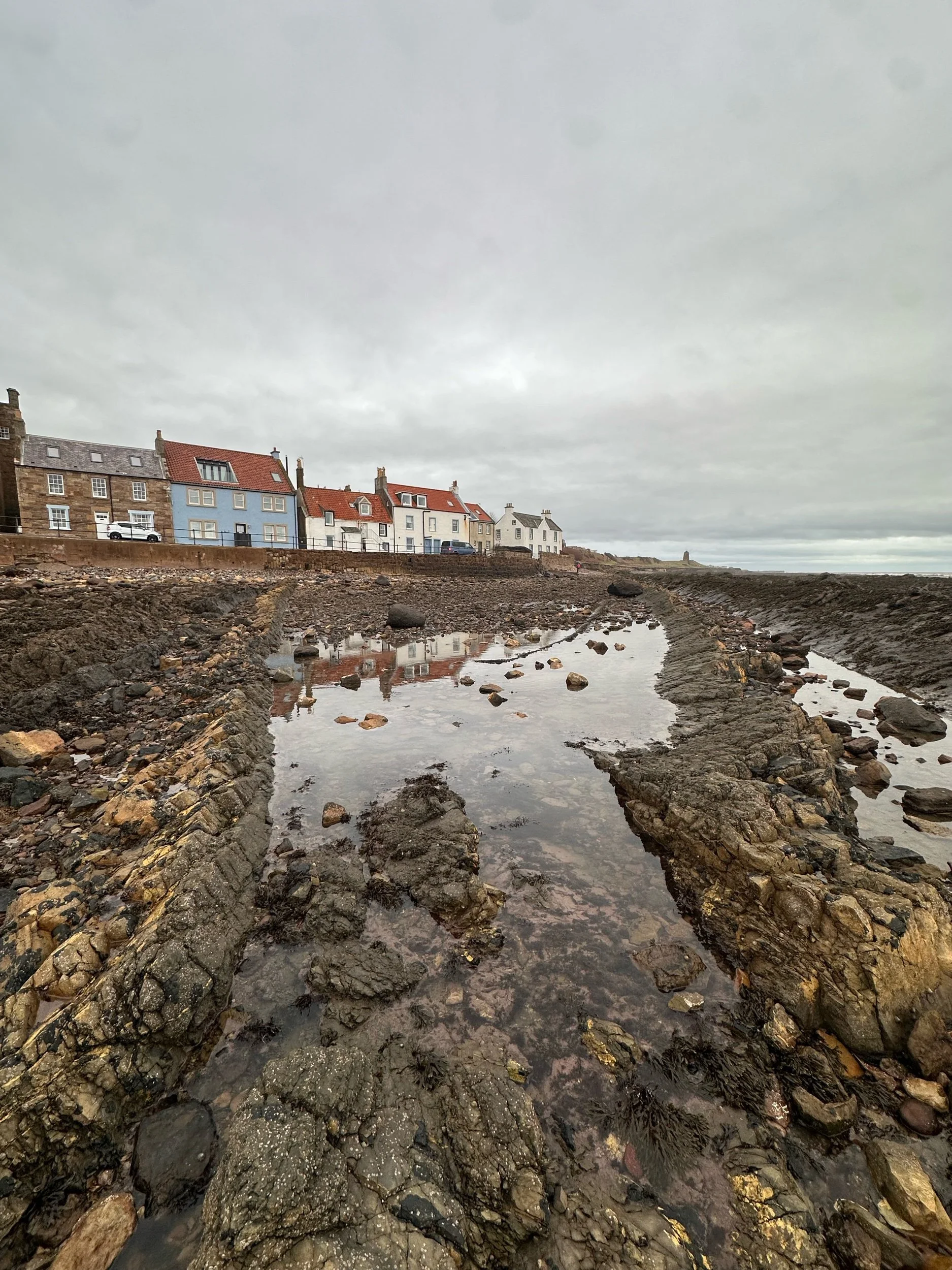
This event has been cancelled and will be re-organised soon.
Fossils, Faults & Folds: A Geology Tour of St Monans with @ScottishGeologist
Join @ScottishGeologist for a fascinating geological walking tour along St Monans beach, one of the East Neuk of Fife’s most charming fishing villages — and a hidden gem for Carboniferous coastal geology. From fossil-rich rock platforms to swampy coal seams and beautifully exposed fault zones, this tour offers a brilliant mix of sedimentary structures, volcanic intrusions, and stories of Scotland’s industrial and natural past.
What to Expect
🪨 Carboniferous Sedimentary Rocks
Walk across 320-million-year-old rocks formed in tropical delta environments — part of the Lower Carboniferous Strathclyde Group.
See mudstones, siltstones, coals, limestones, and sandstones laid down in deep marine, rivers, deltas, swamps, lagoons, and shallow marine settings.
Spot cross-bedding, ripple marks, and mud cracks, beautifully preserved in the intertidal rock platforms.
🦴 Fossils from a Tropical Past
Search for fossilised corals, crinoids, brachiopods, and other marine life in the limestone and shale layers.
Learn how these organisms lived in warm, shallow seas during the Carboniferous — long before Scotland drifted north to its current latitude.
🌋 Volcanic Intrusions and coal seams
See how sills of dolerite (techinite) intruded the Carboniferous sediments — baked the surrounding rocks, and altered nearby coal seams.
Understand how the local fireclays and coals formed from ancient plant material in swampy environments.
🧭 Faults and folds
Visit spectacular exposures of the St Monans Fault, where you can see rock layers offset, tilted, and fractured by tectonic forces.
Stand in the core of the St monans syncline - a fold that formed during the late stages of the variscian orogeny
Discuss how these faults were active during and after the Carboniferous, and how they influence modern landscape features.
Trace veins, fault breccias, and deformation textures along the coast.
🌊 Coastal Erosion and Modern Geology
Observe how wave erosion is actively exposing more fossils and rock features along the shore.
Discuss the relationship between rock type and erosion rates, and how geology shapes the modern coastline.
See raised beaches and glacial erratics from more recent Ice Age activity in the area.
👣 Hands-On Field Experience
Practice reading sedimentary structures, tracing faults, and interpreting the sequence of events recorded in the rocks.
Try a fossil ID session, or photo interpretation with @ScottishGeologist’s guidance.
Who Should Attend?
Perfect for families, geology beginners, students, and fossil lovers.
Great for those interested about geology, fossil hunting, or industrial heritage.
Accessible route with optional shore scrambling — suitable for all levels of interest.
Event Details
📍 Location: St Monans beach, Fife - meeting point in the following car park - https://maps.app.goo.gl/Xv8hZezLWNxkwXRC7
🗓️ Date: Saturday 14th November 2026 11:00 to 13:00
⏰ Duration: 2 hours
🎟️ Price: £25pp meet us there, transport from Glasgow - £45pp
🥾 Accessibility: Mostly flat coastal paths and beach platforms; some uneven terrain during low tide fossil stops
Why Join This Tour?
Led by award-winning geoscience communicator @ScottishGeologist, this tour lets you explore a quiet stretch of Scotland’s coast where the rocks are full of life — literally. With fossils underfoot, coal seams in the cliffs, and a dramatic geological fault slicing through the rocks, St Monans offers a stunning and unexpected geological adventure.
Book Your St Monans Fossils & Faults Tour Today
🌿 Ancient swamps.
🦴 Hidden fossils.
🌋 Volcanic intrusions.
🧭 Faulted rock layers.

Arbroath offers a fascinating journey through Scotland’s ancient geological past during the Devonian period, 400 million years ago. The locations we visit are famous for their diverse rock formations, unique coastal features, and the role they played in shaping our understanding of Earth’s history, particularly the development of modern geology.
The bus will leave Glasgow city centre at 10:30am Meeting time will be outside Costa Coffee, 50 George Square, Glasgow, G2 1EH.
Arbroath
What makes up the Arbroath Cliffs?
Am gonna tell you…
Join us on an unforgettable geology tour along Seaton Cliffs at Arbroath and discover how the geology of the surrounding area has an impact on the landscapes themselves, what makes this place so red and why there’s loads of sedimentary rocks?
As we explore this stunning site, you’ll discover the unique geological history of the area. You’ll learn about the significance of the exposed layers of Old Red Sandstone, formed during the Devonian period which provide a fascinating window into the ancient landscapes and climate
This moderate hike involves a relatively flat 1.5 mile walk along the Arbroath Cliffs, so be prepared for a little adventure! Comfortable walking shoes and a sense of wonder are all you need to fully experience the awe-inspiring geology of this hidden gem north of Dundee.
Perfect for nature lovers, geology enthusiasts, and photographers alike, this tour will leave you with a deeper appreciation for the beauty and power of Scotland’s natural landscapes.
Learn about the transition between different sedimentary environments over millions of years.
Learn about erosion processes that shaped the distinctive cliffs and sea stacks, which are among the finest examples of natural erosion in Scotland.
Learn about the old red sandstone formation and sedimentary rocks
You can join us for this trip for £25 - meeting point will be at the following locality at 12:00 - Arbroath Cliffs Car Park, King's Dr, Arbroath DD11 5ED
Pricing / ticket options
Meet us there - £25
Pick up from Glasgow - £45
Return to Glasgow will be around
Associated Risks
There are a few potential risks associated with this type of tour, which would be highlighted by the guide to ensure safety:
1. Cliffside Hazards: Both Stonehaven and Arbroath are coastal locations with high cliffs, and the primary risk would be falls or injuries caused by loose rocks. Visitors would need to stay clear of cliff edges, and extra caution should be exercised in wet or windy conditions, which can make paths slippery.
2. Tidal Hazards: Some areas of the coastline are only accessible at low tide, thus will be planned in and accessed on the day to avoid incoming tides that could trap visitors in vulnerable areas. An understanding of the local tidal patterns is essential to minimize this risk.
3. Erosion and Rockfall: Coastal erosion is a natural process, and rockfalls can occur without warning. Visitors would need to be aware of signs of unstable cliffs or recent rockfall activity, and the geologist would point out areas to avoid.
4. Weather Conditions: Scotland’s weather can be unpredictable, with sudden changes that could pose risks of hypothermia or heat exhaustion, depending on the season. Participants should be advised to wear appropriate clothing and footwear, as well as bring supplies such as water and sun protection. Please wrap up as this tour will be held in December.
5. Slippery Surfaces: The coastal terrain includes rocky areas and beaches that can be slick with algae or sea spray. Caution must be taken when walking over such surfaces to avoid slips and falls.
Join @ScottishGeologist for an unforgettable journey along Dunure Beach, where Scotland’s ancient geological history meets stunning coastal landscapes. Explore the fascinating rock formations, learn about volcanic processes, and uncover how minerals along this beautiful Ayrshire coastline form.
What to Expect
🪨 Explore Scotland’s Ancient Volcanic Rocks
Examine the volcanic rocks that formed between 390 to 420 million years ago during the Devonian period. Learn how these rocks reveal the history of volcanic activity related to the Caledonian orogeny that once dominated the area.
🌊 Coastal Geology in Action
Discover how wave erosion, tidal forces, and sea-level changes continue to shape the coastline. Observe striking features such as natural arches, sea stacks, and wave-cut platforms.
⚒️ Learning About Agate Formation
The group then focuses on the formation of agates, a key feature of Dunure Beach. The guide demonstrates how these semi-precious stones formed in gas bubbles within ancient lava and points out where they can be found in the rocky shoreline. Participants are taught to identify agates by their distinct banding patterns and glossy textures.
💎 Hunt for Agates
Equipped with some tips and guidance, participants are given time to explore and hunt for agates themselves. It’s a hands-on experience, with plenty of excitement as people uncover potential treasures among the pebbles. The guide offers assistance and verifies your finds, explaining the unique properties of each stone.
🌋 Uncover Volcanic History
Investigate volcanic features like basalt flows, sills and dykes that tell the story of fiery eruptions in Scotland’s distant past. Dunure’s geology provides a rare window into this dramatic chapter of Earth’s history.
👣 Guided Walk and Interpretation
Enjoy a guided walk along the beach, exploring rock outcrops, cliffs, and tidal pools. The tour includes hands-on activities like identifying rock types, sketching geological formations, and interpreting the processes that created them.
🌍 Connection Between Geology and Culture
Learn how the geology of Dunure Beach influenced human history, from local building materials to its role in shaping the surrounding landscape and communities.
Who Should Attend?
This tour is ideal for geology enthusiasts, agate hunters, and anyone who loves coastal exploration. No prior geological knowledge is needed—just bring your curiosity and a sense of adventure!
Event Details
📍 Location: Dunure castle, South Ayrshire
🗓️ Date: Sunday 20th June 2026
⏰ Time: 12:00-14:00
🎟️ Price: Meet us there - £25pp, Transport from Glasgow city centre - £45pp
Why Join This Tour?
Led by the knowledgeable @ScottishGeologist, this hands-on experience offers a unique opportunity to explore the intersection of Scotland’s geological and cultural history, all while enjoying the fresh sea air and breathtaking views of Dunure Beach.
Upcoming 3 day Geology Expeditions 2026
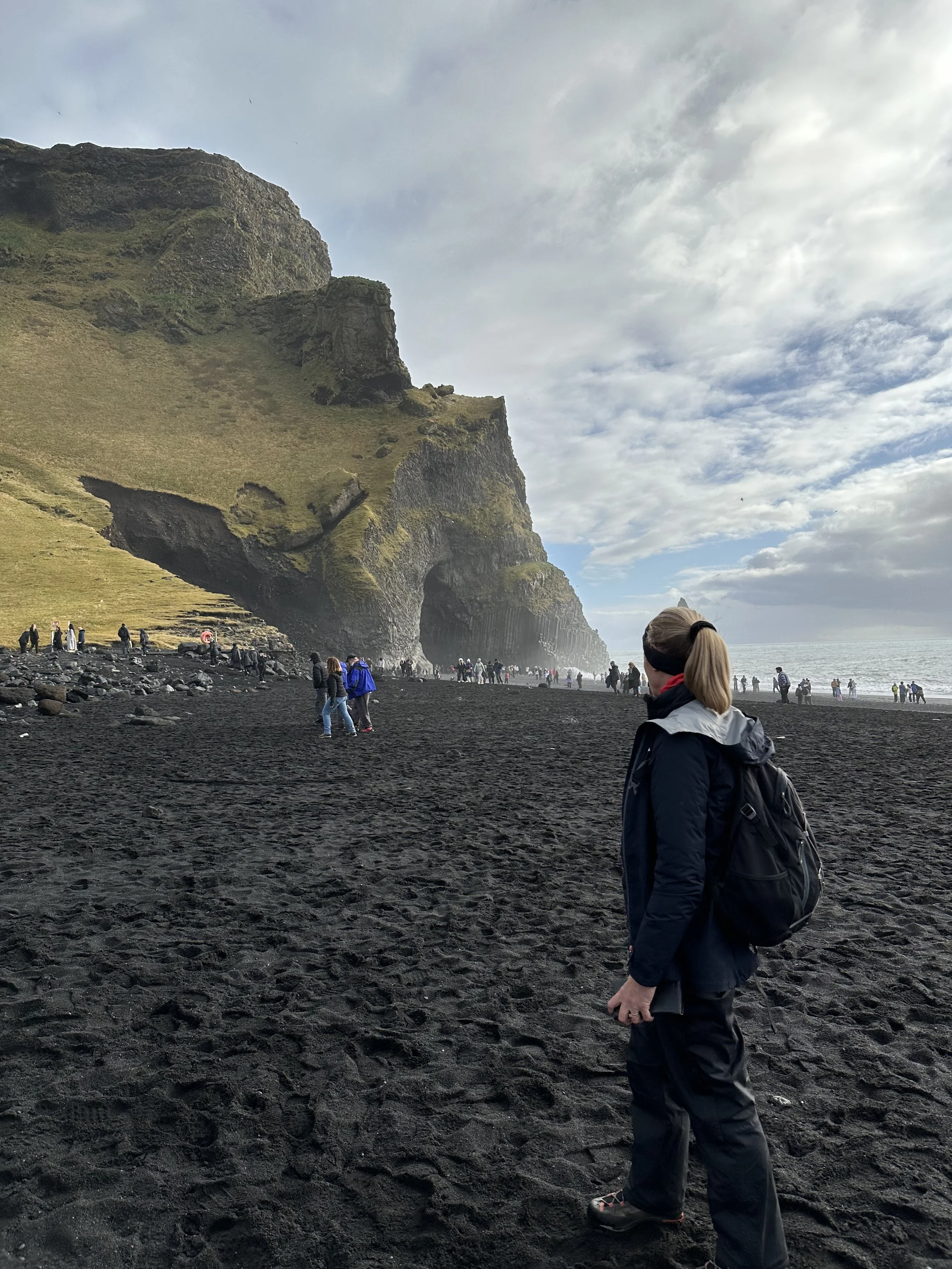
Where Fire Meets Ice - Exploring an Active Rift Zone with a geologist
Explore Iceland that sits on top of the Mid Atlantic Ridge - where the North American and Eurasian plates are literally moving away from each other underneath your feet.
Join me for a 4 day geology focused adventure through some of Iceland’s most spectacular landscapes. This tour takes in famous sights across the Golden Circle and south coast, but with a much deeper geological story behind them. We’ll explore tectonic plate boundaries, geysers, lava fields, black sand beaches, waterfalls and geothermal volcanic landscapes - all explained in an engaging and easy understanding way.
Iceland is one of the few places on Earth where you can witness volcanism in action, driven by both a hotspot and a plate boundary. Fresh lava fields, eruptive history and active systems make this a living, breathing volcanic landscape.
Active Volcanism
Rift valleys and Fault zones
Explore an active plate boundary with a professional geologist - This is one of @scottishgeologist’s favourite locations. Iceland sits astride the Mid-Atlantic Ridge, where the Earth’s crust is being pulled apart. This creates dramatic rift valleys and fault systems that allow you to literally walk between tectonic plates.
Geysers and Geothermal systems
Superheated groundwater interacts with shallow magma to create explosive geysers, steaming vents and boiling mud pools. These geothermal systems are a direct window into the heat and energy beneath Iceland.
Glacial Landscapes
Iceland’s landscapes are shaped by the powerful interaction of ice and fire, where glaciers carve the land and volcanoes build it. Black sand beaches form from broken-down lava, while waterfalls reveal layers of volcanic rock beneath.
Highlights
Walk between tectonic plates at Thingvellir
See erupting geysers and geothermal activity
Explore Iceland’s famous waterfalls, glacial and volcanic landscapes
Visit black sand beaches and basalt cliffs
Learn the geology behind Iceland’s landscapes
What’s Included?
Included
4 days of guided touring (Saturday 25th September 08:30am to Tuesday 28th September 17:00)
Transport during the tour - meet in Keflavik at 08:30 - Luisa will arrange pick up from there. . Drop off Tuesday 28th 17:00.
Expert geology interpretation
Visits to key locations on the itinerary
3 nights Accommodation (Tuesday to Friday) in a 3-4 star hotel) there may be an extra charge associated with single occupancy room. If arriving on Monday evening we would recommend you book accommodation at the airport. If leaving on Friday evening, or Saturday morning - we recommend you stay at the airport.
Not Included
Flights
Food and drink
Personal travel insurance
Optional extras such as the blue lagoon on the last day
Itinerary
Your Iceland Geology Expedition
Over four unforgettable days, we’ll travel across the Reykjanes Peninsula, explore the famous Golden Circle and journey along Iceland’s spectacular south coast.
Each day combines iconic Icelandic scenery with accessible geological interpretation, short walks and plenty of opportunities for photographs. The itinerary may be adjusted to suit the weather, road conditions, volcanic activity and daylight hours.
Day 1: Recent Eruptions and the Reykjanes Peninsula
Our adventure begins at Keflavík Airport before we travel across the otherworldly landscapes of the Reykjanes Peninsula - meet between 08:30 to 09:00 in the arrivals hall.
This is one of Iceland’s most geologically active regions, where the Mid-Atlantic Ridge rises above sea level and recent eruptions have transformed the landscape.
We’ll visit locations including:
The Bridge Between Continents
Geothermal areas with steaming vents and boiling mud
Recent lava fields and volcanic landscapes, subject to safe official access
Colourful rocks altered by hot, mineral-rich fluids
We’ll learn how Iceland is being pulled apart, how new crust is created and what happens as fresh lava cools and begins to form a new landscape.
Day 2: The Golden Circle
Today we’ll explore Iceland’s famous Golden Circle, beginning at Þingvellir National Park.
At Þingvellir, we’ll walk through an active rift zone where the North American and Eurasian tectonic plates are gradually moving apart. Dramatic faults, fissures and lava flows reveal how the crust is stretching and subsiding.
We’ll then continue to:
The Geysir geothermal area
The regularly erupting Strokkur geyser
Steaming vents and mineral-rich geothermal ground
Gullfoss waterfall
An optional volcanic crater stop, depending on daylight and weather
We’ll discover how geysers erupt, why Iceland has so much geothermal activity and how glacial rivers have carved through its layered volcanic rocks.
Day 3: Waterfalls, Glaciers and Volcanoes
We’ll travel east along Iceland’s spectacular south coast, where waterfalls tumble over ancient sea cliffs and glaciers descend from ice-covered volcanoes.
Our stops will include:
Seljalandsfoss
Gljúfrabúi, if conditions allow
Skógafoss
Sólheimajökull glacier viewpoint
Views towards Mýrdalsjökull and the Katla volcanic system
We’ll examine layers of basaltic lava, explore landscapes created by glaciers and learn how eruptions beneath the ice can trigger powerful meltwater floods known as jökulhlaups.
This day includes a viewpoint walk towards Sólheimajökull, where we’ll look for moraines, glacial sediment and evidence of the glacier’s changing extent.
Day 4: Black Sand and Basalt Columns
Our final day begins on Iceland’s dramatic southern coastline.
At Reynisfjara, we’ll explore towering basalt columns, volcanic caves, black sand and sea stacks while learning how lava, waves and weather have shaped the coast.
Our stops may include:
Reynisfjara’s basalt columns and black sand
Reynisdrangar sea stacks
Dyrhólaey volcanic headland and natural arch
Additional south-coast locations chosen according to the weather
The geothermal landscapes of the Hengill volcanic system
We’ll then travel west towards Reykjavík and Keflavík, bringing together the story of Iceland’s volcanoes, glaciers, plate boundary and geothermal systems.
The expedition concludes with a visit to the Blue Lagoon on Friday evening (extra cost associated with this). Drop off at Keflavík airport either before at 17:00 or after this.
What to Expect
This is a small-group, geology-led adventure suitable for enthusiastic beginners and geology lovers alike.
Each day includes:
Short walks and scenic viewpoints - approximate walking per day - 3 to 5km
Accessible geological explanations
Regular comfort and refreshment breaks
Opportunities for photography and questions
A relaxed and friendly group atmosphere
You do not need any previous geological knowledge to join the trip—just an interest in Iceland’s extraordinary landscape.
Important Itinerary Information
Iceland is a dynamic natural environment. The order of the itinerary and the locations visited may change because of weather, road conditions, daylight, volcanic activity or official safety restrictions.
Visits to recent eruption sites and geothermal areas are always subject to safe, officially permitted access. Any replacement stops will be chosen to provide an equally interesting geological experience.
Because conditions on Reykjanes can change rapidly, the Icelandic Road and Coastal Administration’s road-condition service and official civil-protection advice should determine the final route.
Why is this tour different?
This isn’t just a standard Iceland trip. This is a geology-led experience designed to help you truly understand the landscapes around you. You’ll still visit some of Iceland’s best-known locations, but instead of simply stopping for photos, you’ll learn how they formed, what they tell us about the Earth, and why Iceland is one of the most geologically fascinating places on the planet.
What to expect
This tour includes a mixture of short walks, scenic stops and geology interpretation throughout. Expect incredible landscapes, changeable weather, and lots of opportunities to stop for photos while learning the story behind the rocks.
Small group experience
Geology-focused guiding
Suitable for enthusiastic beginners and geology lovers alike
Scenic stops throughout
Relaxed, friendly and informative atmosphere
What you’ll learn
How Iceland sits on a tectonic plate boundary
Why Iceland has so much volcanic activity
How geysers and geothermal systems work
The formation of Igneous rocks
How lava flows shape the landscape
How glaciers, floods and volcanoes interact
Why Iceland’s black sand beaches are black
Price
Starting from £1595.00pp
Upcoming Workshops
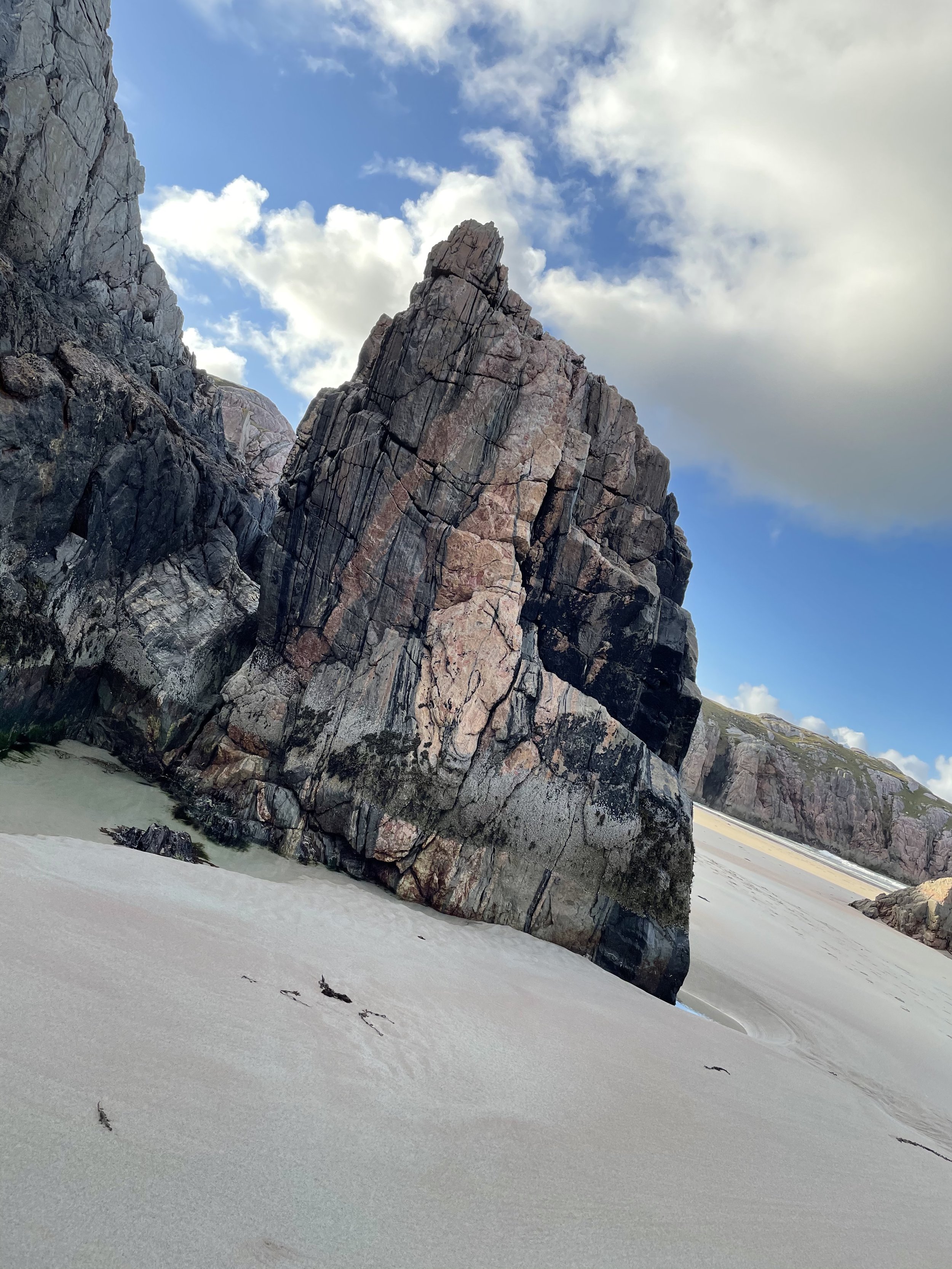
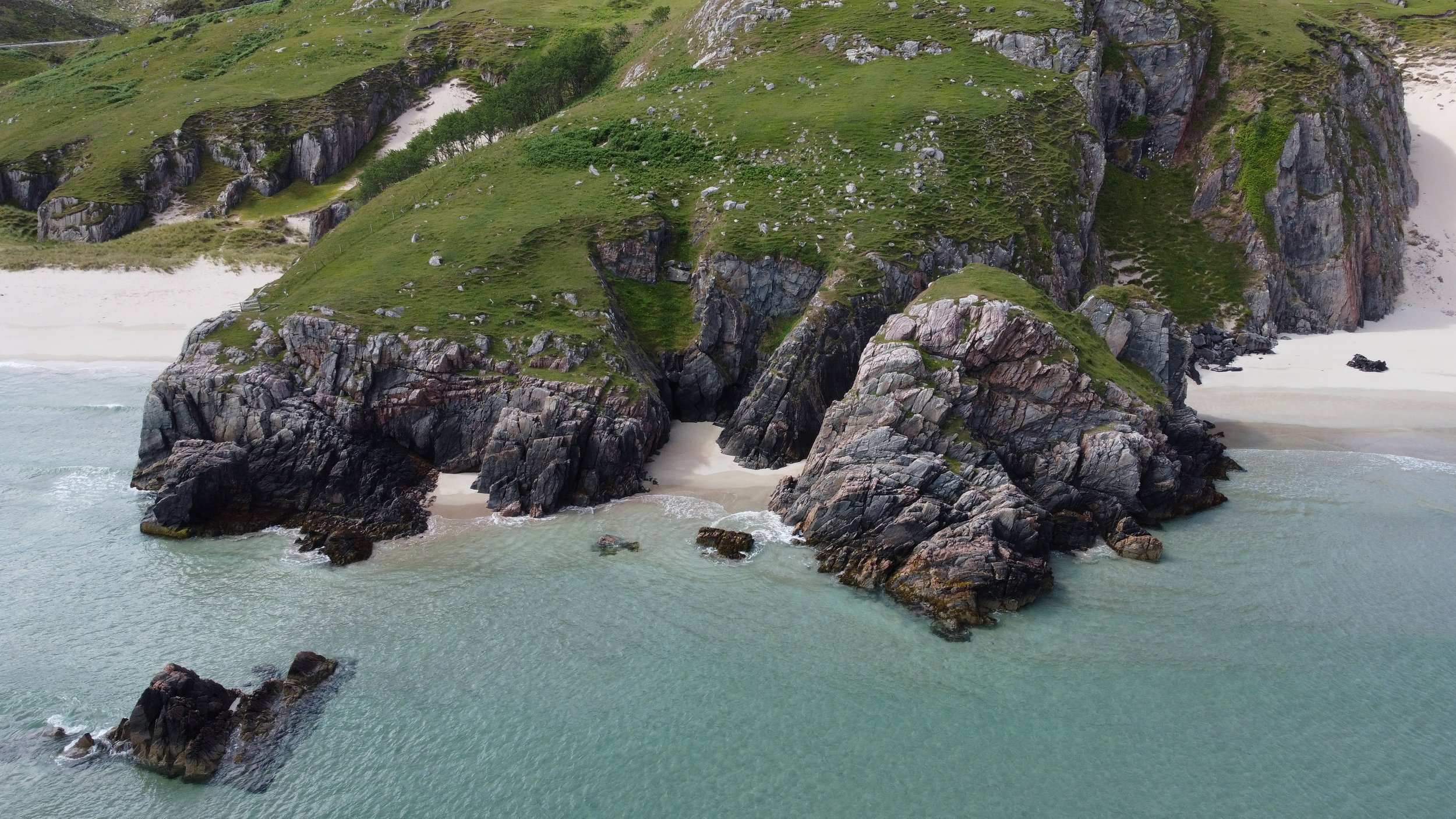
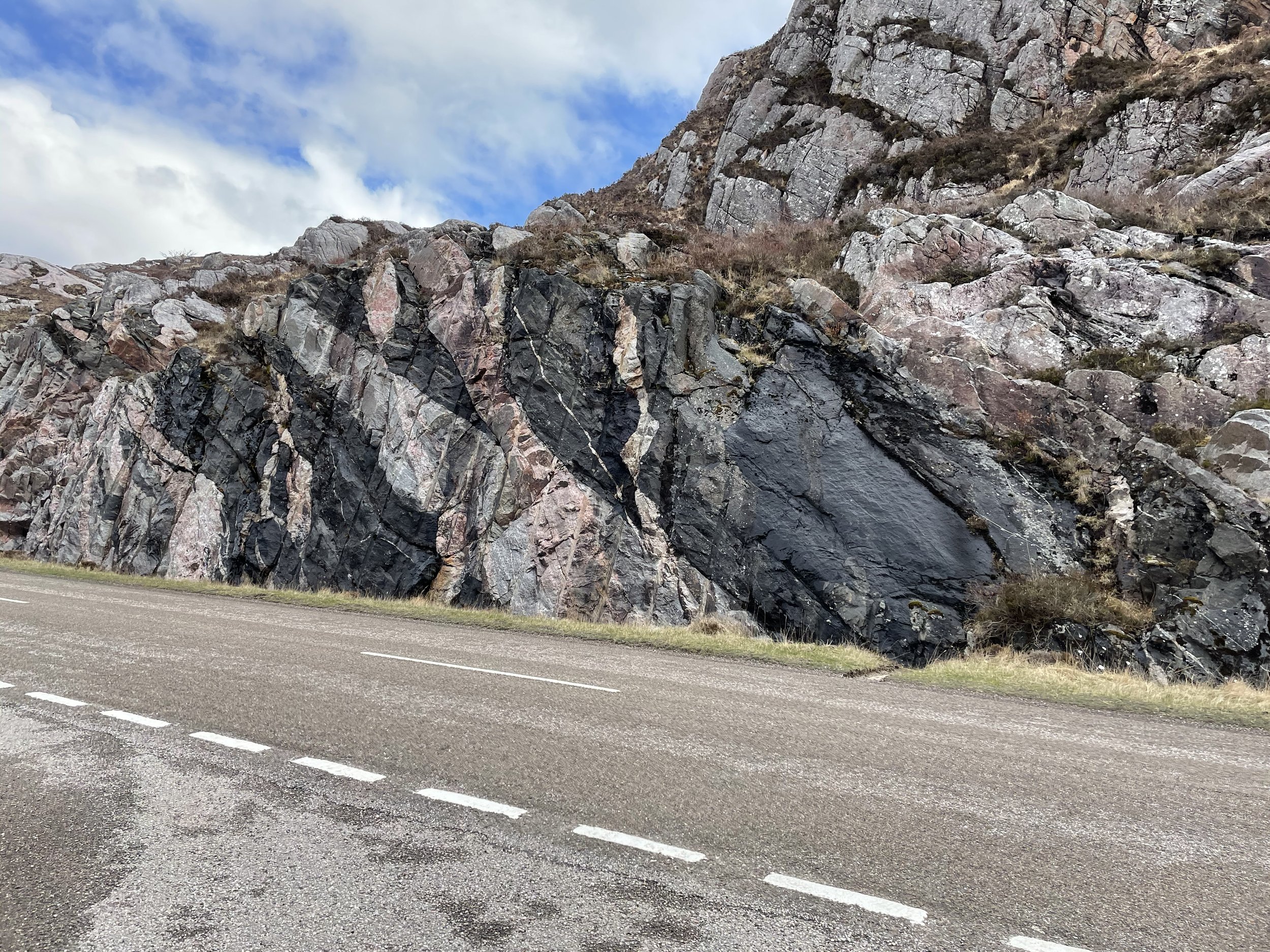
Did you Know…
That Scotland has some of the oldest rocks in Europe? Click below to find out more about the geological history of Scotland.
Let’s work together
Buy Me a Coffee
Support @scottishgeologist by contributing today. Each contribution helps Luisa create the educational content she loves creating.